A Network Operating System (NOS) is specialized software that manages, controls, and secures network resources, facilitating communication and collaboration among all connected devices—such as desktops, servers, and printers. Unlike a traditional OS that manages a single device, a NOS extends its capabilities across an entire network to provide centralized management and optimization.
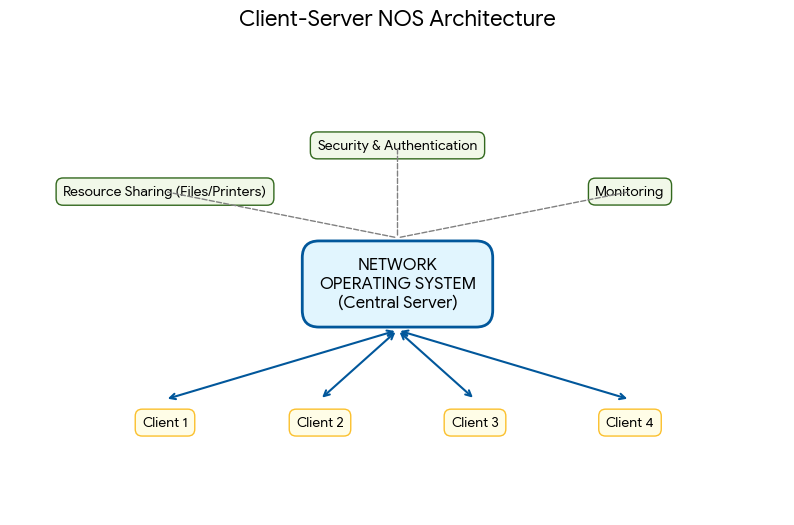
Key Functions of a NOS
- Resource Sharing: Allows multiple users to concurrently access shared files, printers, and backup services.
- User Management: Centralizes the creation and management of user accounts, groups, and administrative permissions.
- Security: Implements login restrictions, password authentication, and firewalls to protect shared network resources.
- Protocol Support: Manages various communication protocols (like TCP/IP, DNS, and DHCP) to ensure different devices can “talk” to each other.
Types of Network Operating Systems
- Client-Server: A central server manages the network and provides resources to various “client” workstations. The server handles heavy processing and storage, while clients send requests for services like printing or document retrieval.
- Peer-to-Peer: Every node in the network is equal, with no central server. Each computer can share its own resources and files with others, making it suitable for smaller environments with fewer than 25 workstations.