Concept of I/O Redirection in Linux.
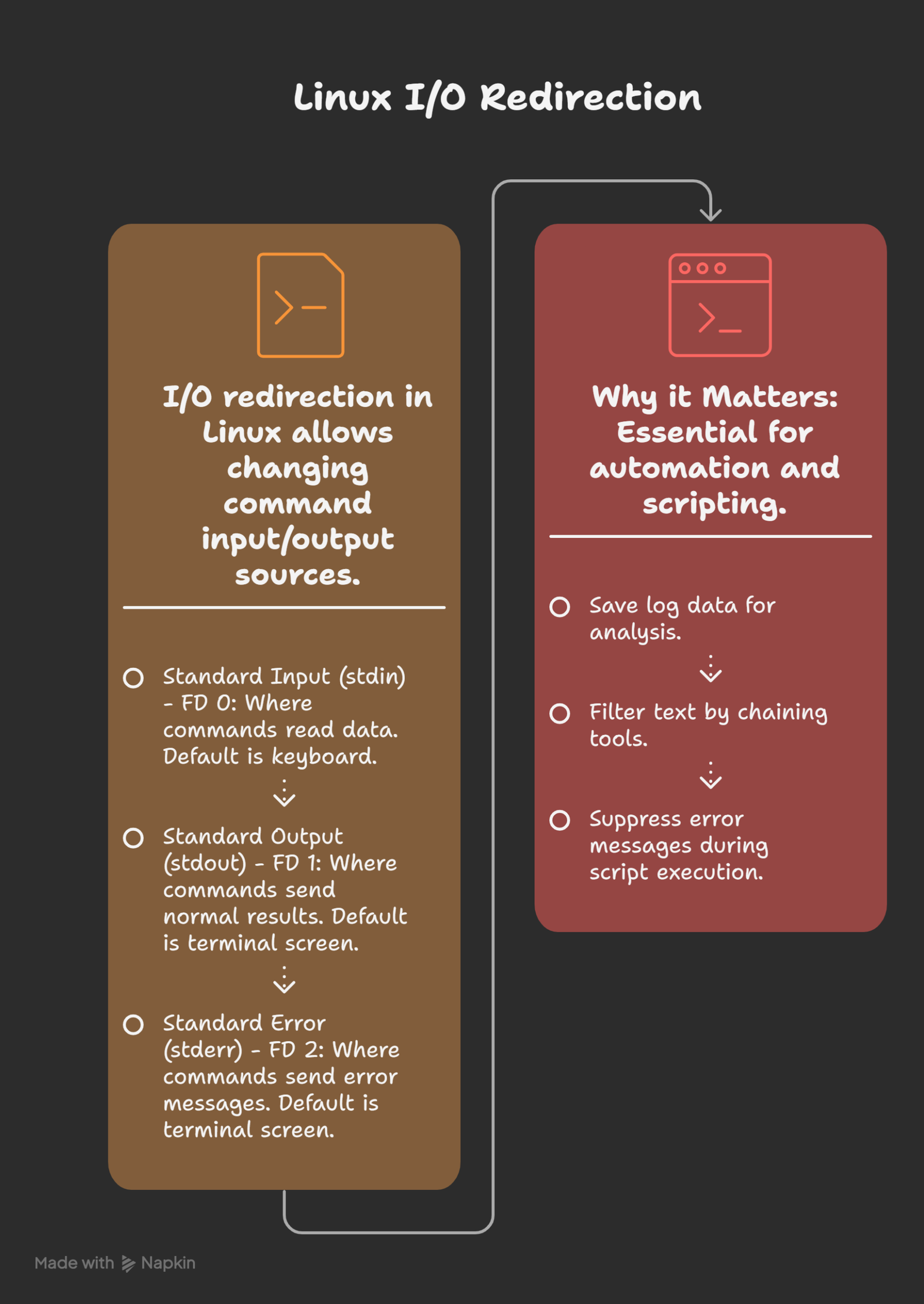
I/O (Input/Output) redirection in Linux is a powerful feature that allows you to change where a command gets its input from and where it sends its output or error messages. By default, commands read from your keyboard and print to your screen, but redirection lets you swap these with files or other programs.
The Three Standard Streams
Standard Input (stdin) – FD 0: Where the command reads data. Default is the keyboard.
Standard Output (stdout) – FD 1: Where the command sends its normal results. Default is the terminal screen.
Standard Error (stderr) – FD 2: Where the command sends error messages. Default is the terminal screen.
Why it Matters
I/O redirection is essential for automation and scripting. It allows you to save log data for later analysis, filter massive amounts of text by chaining simple tools together, and suppress annoying error messages while scripts are running.