Tenses for Different Kinds of Narration – Class 11 English Notes
Grammar | Chapter – 1
Tenses for Different Kinds of Narration
1. What is Tense?
Tense is the form of a verb that shows the time of an action (present, past or future) and its state (simple, continuous, perfect or perfect continuous). There are 12 tenses in English.
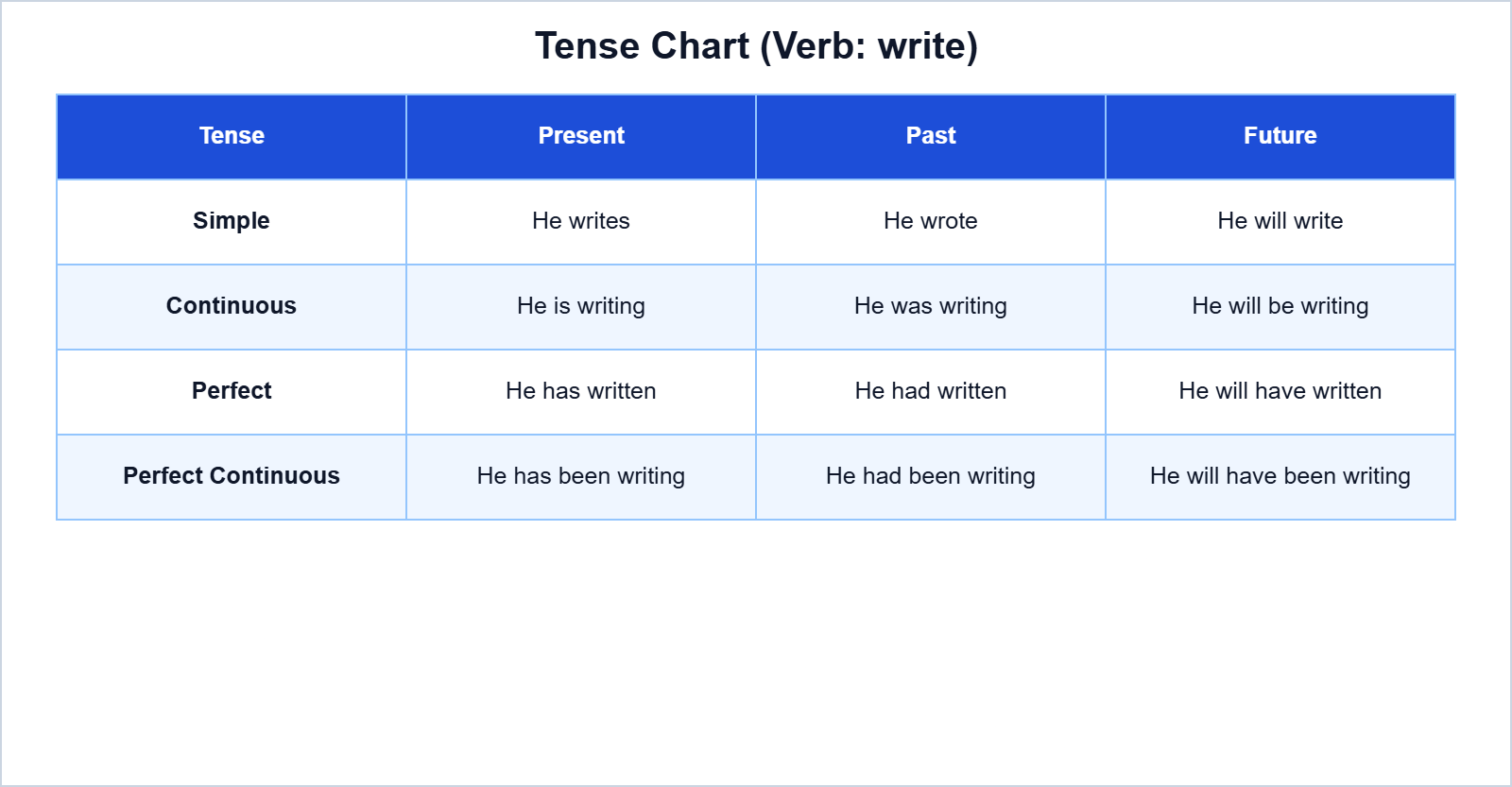
2. Uses of the Main Tenses
- Simple present: Habits, general truths, fixed timetables. Example: The sun rises in the east.
- Present continuous: Actions happening now. Example: She is reading a novel.
- Present perfect: Actions just completed or with results in the present. Example: I have finished my homework.
- Simple past: Completed actions in the past. Example: We visited Manali last year.
- Past continuous: An action in progress in the past. Example: It was raining when I reached home.
- Past perfect: The earlier of two past actions. Example: The patient had died before the doctor came.
- Simple future: Actions that will happen. Example: They will reach tomorrow.
3. Tenses in Narration (Media, Commentary, Reports)
The syllabus focuses on how different tenses are used in different kinds of writing and speaking.
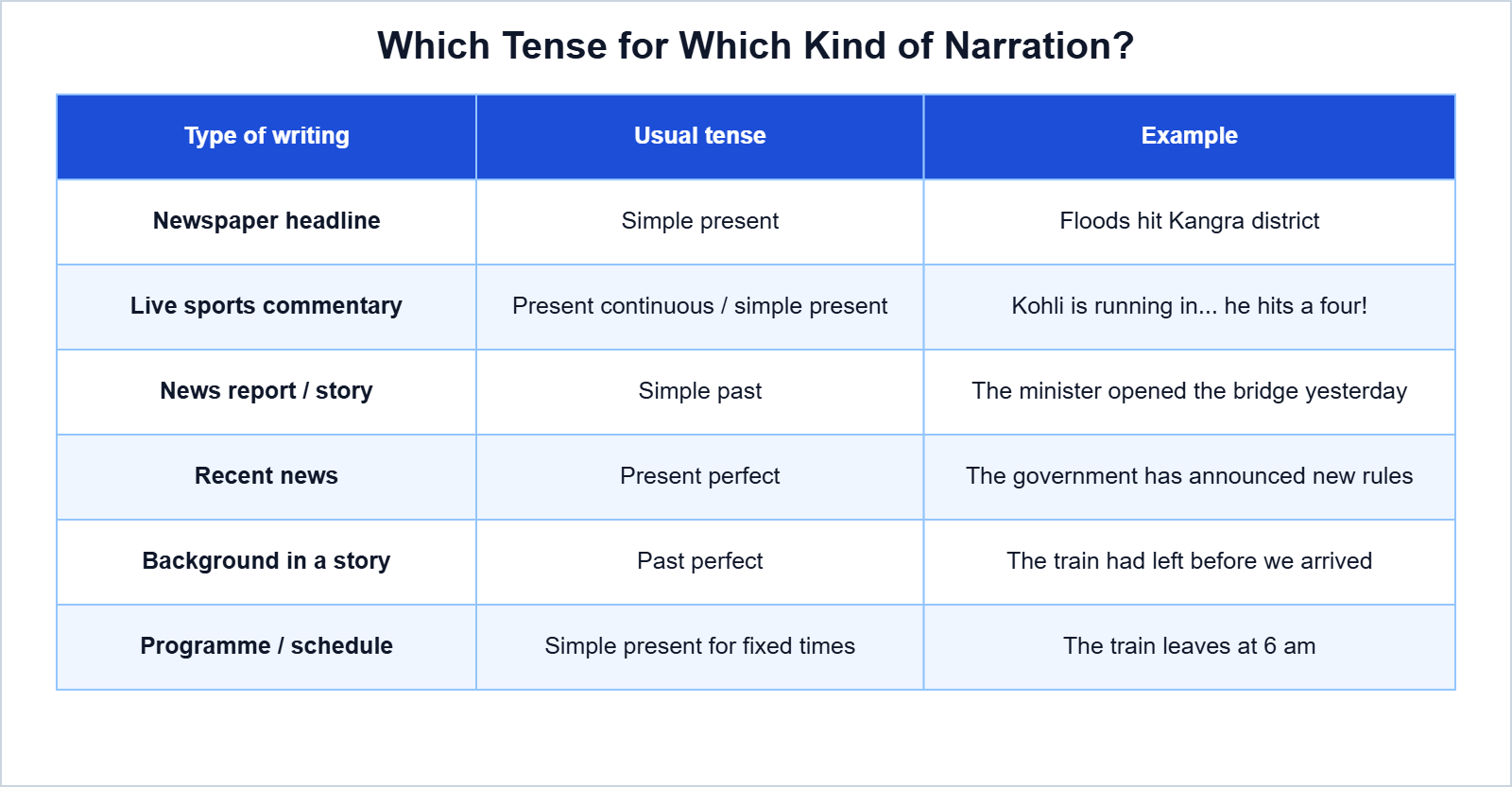
Exam point: Newspaper headlines use the simple present for past events, to make news feel fresh and immediate. Articles like “a” and “the” are often dropped in headlines.
4. Examples
Headline: PM inaugurates new airport in Mandi
Report: The Prime Minister inaugurated the new airport in Mandi on Sunday. He said that it would boost tourism. Thousands of people had gathered at the venue since early morning.
Commentary: The bowler is running in… he bowls… and the batsman hits it over the fence! It is a six!
Remember: In reported speech and reports, the past tense is usually used, and the past perfect shows what happened even earlier.
5. Practice Questions (with Answers)
Fill in the blanks with the correct form of the verb:
- Look! The children ______ (play) in the rain. Ans. are playing
- She ______ (live) in Delhi since 2015. Ans. has lived / has been living
- When we reached the station, the train ______ (leave). Ans. had left
- Water ______ (boil) at 100 degrees Celsius. Ans. boils
- I ______ (meet) him tomorrow. Ans. will meet
Easy Memory Trick: “Simple, Continuous (-ing), Perfect (has/had + V3), Perfect Continuous (been + -ing)”: remember the four forms for each time.
Conclusion: Correct use of tenses makes writing clear. Different kinds of narration, such as headlines, reports and commentaries, use different tenses to give the right effect.