The Address – Class 11 English Notes
Snapshots | Chapter – 2
The Address
(Marga Minco)
1. About the Author
Marga Minco (1920-2023) was a Dutch writer and journalist from a Jewish family. Many of her family members were killed during the Second World War. Her stories, including The Address, describe the pain of the war and of losing loved ones.
2. Characters
- The narrator: A young Jewish woman who survived the war.
- The narrator’s mother: Gave her valuable things to Mrs Dorling during the war; she did not survive.
- Mrs Dorling: An old acquaintance who took the family’s possessions and kept them.
- Mrs Dorling’s daughter: Lets the narrator into the house on her second visit.
3. Summary
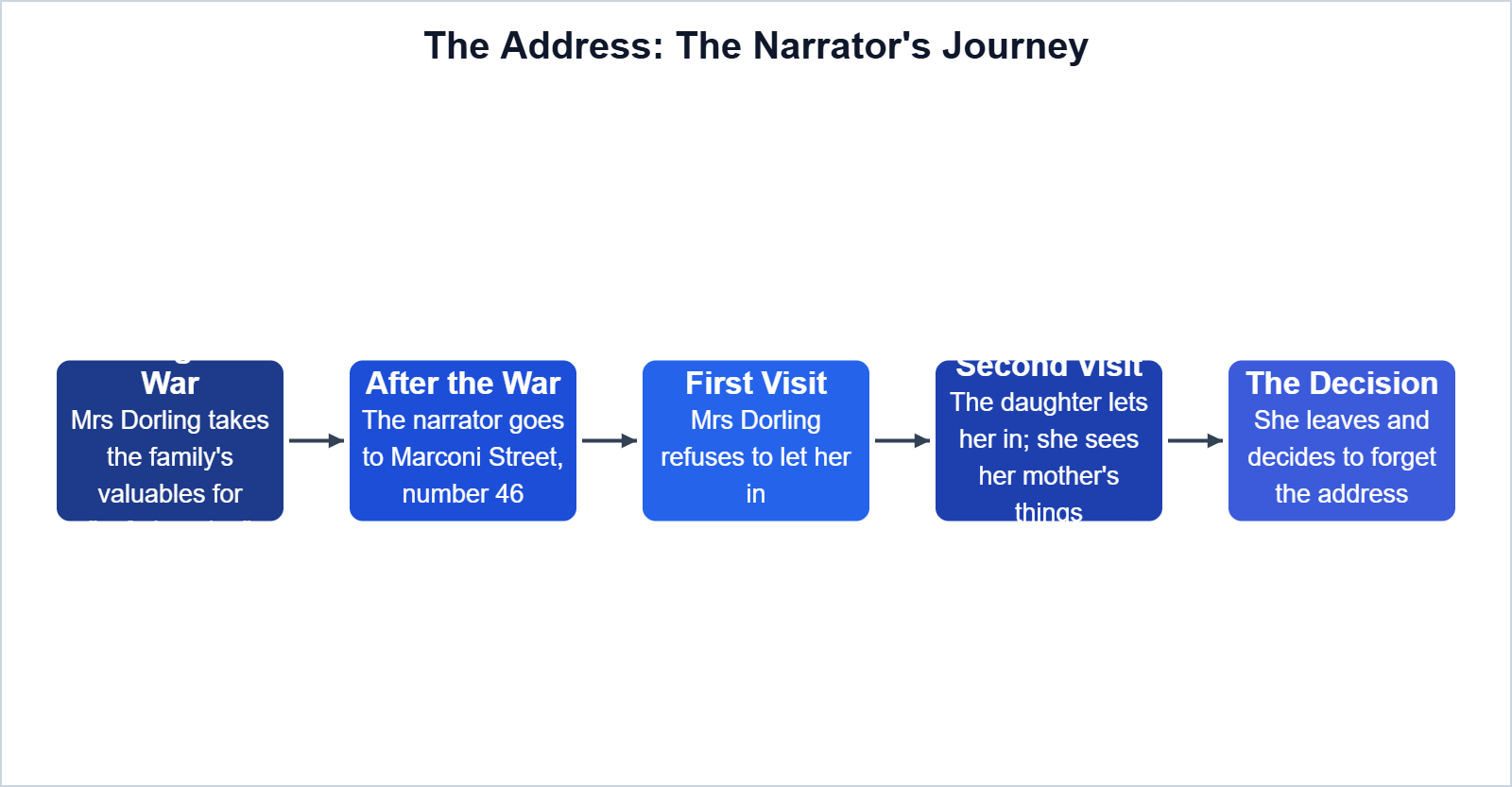
- Background: During the Second World War, Mrs Dorling, an old acquaintance, kept visiting the narrator’s mother and took away many valuable things, such as silver, plates and a tablecloth, saying she would keep them safe. The mother gave her the address: Marconi Street, number 46.
- The first visit: After the war, the narrator, now alone, goes to that address. Mrs Dorling opens the door but pretends not to know her and refuses to let her in.
- The second visit: The narrator returns later. This time Mrs Dorling’s daughter opens the door and lets her into the living room. The narrator sees her mother’s things: the tablecloth, the silver cutlery, a candle-holder, the plates and the furniture. But in this strange room they look out of place and lifeless.
- The decision: The objects remind her of her mother and her old life, which can never return. They have lost their meaning without the people who used them. She decides to leave everything behind and to forget the address.
Exam point: The address in the story is Marconi Street, Number 46.
4. Theme and Message
- Pain of war: War destroys families and leaves survivors alone with memories.
- Human greed: Some people take advantage of others’ suffering.
- Letting go: Objects are precious only because of the people and memories linked with them. Without them, they mean nothing.
Remember: The narrator does not take back her mother’s things. She chooses to move on instead of living in the past.
5. Short Answer Questions
Q1. Who was Mrs Dorling?
Ans. She was an old acquaintance of the narrator’s mother who took the family’s valuable things during the war, claiming she would keep them safe.
Q2. Why did the narrator go to Marconi Street?
Ans. She wanted to see her mother’s possessions, which had been taken there by Mrs Dorling during the war.
Q3. How did Mrs Dorling behave on the first visit?
Ans. She pretended not to recognise the narrator and refused to let her in.
Q4. Why did the narrator decide to forget the address?
Ans. Seeing the things in a strange room made her realise that they were no longer part of her life. They were linked to her painful past, so she decided to let them go and move on.
6. Long Answer Question
Q. Describe the narrator’s feelings when she saw her mother’s belongings.
Ans. When she entered the room, the narrator immediately recognised many of her mother’s things. At first she felt strongly connected to them, as they brought back memories of her home and family. But soon she felt a deep sadness and confusion. The objects looked out of place in a stranger’s room and seemed to have lost their warmth. She realised that the life they belonged to was gone forever. She felt that holding on to them would only bring pain, so she decided to leave without them and forget the address.
Easy Memory Trick: “46 Marconi, Memories Gone”: the address, and the narrator’s decision to forget it.
Conclusion: The Address is a moving story about the suffering caused by war. It shows that memories and loved ones matter far more than material things.