Grammar | Chapter – 3
Transformation of Sentences and Clauses
1. What is Transformation?
Transformation means changing the form or structure of a sentence without changing its meaning. It shows stylistic variety in writing and helps avoid repetition.
2. Clauses
- Main (independent) clause: Can stand alone as a sentence. Example: I stayed at home because it was raining.
- Subordinate (dependent) clause: Cannot stand alone; depends on the main clause. Example: I stayed at home because it was raining.
Types of subordinate clauses: noun clause (I know that he is honest), adjective clause (The boy who won the prize is my brother), adverb clause (He left when the bell rang).
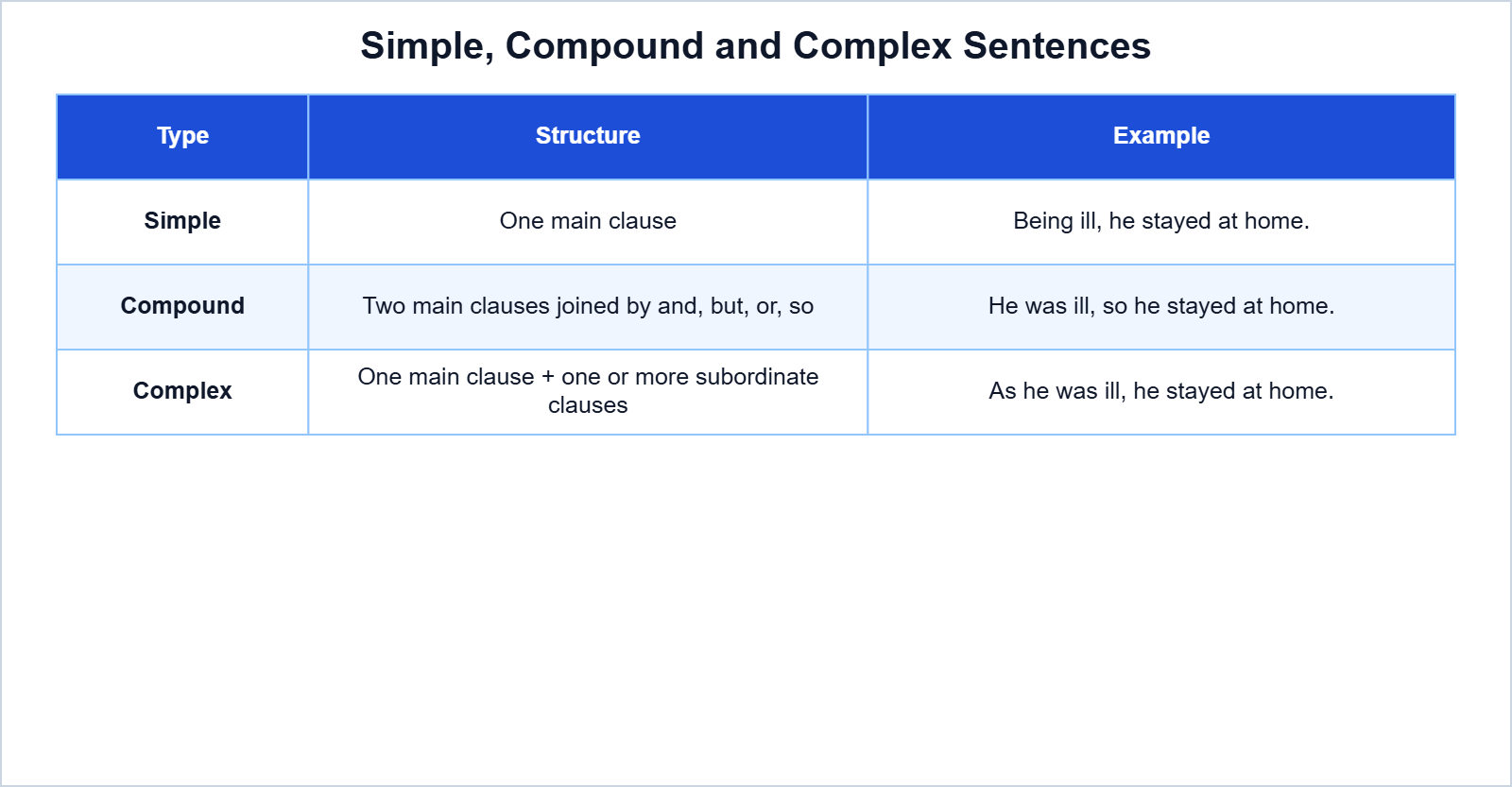
3. Simple, Compound and Complex Sentences
4. Transformation Patterns
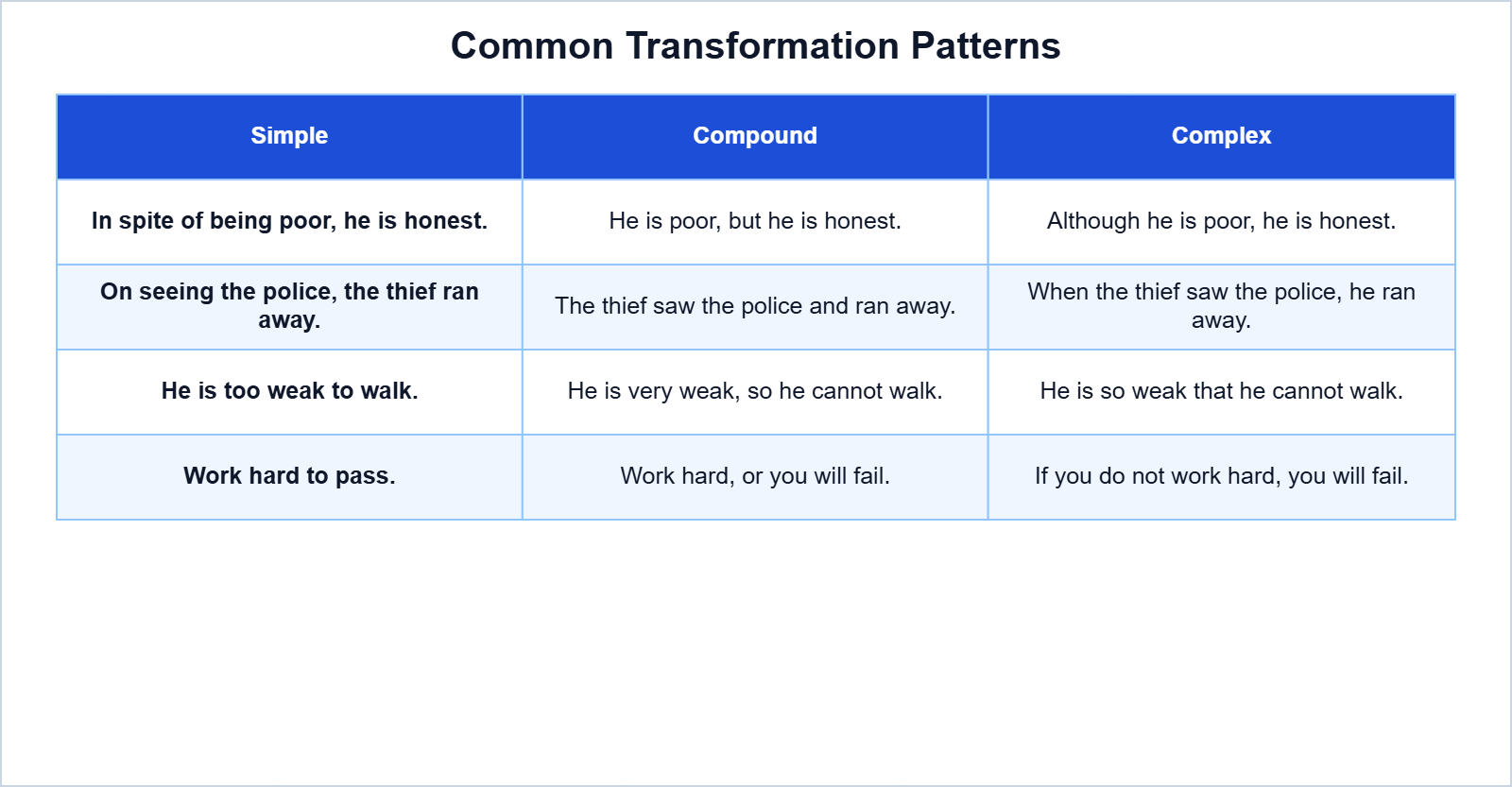
Exam point: Learn the linkers: compound uses and, but, or, so, yet; complex uses although, because, when, if, that, who, which.
5. Other Common Transformations
- Affirmative to negative: He is always punctual. = He is never late.
- Assertive to interrogative: Everyone loves his country. = Who does not love his country?
- Exclamatory to assertive: What a beautiful view it is! = It is a very beautiful view.
- Degrees of comparison: Mount Everest is the highest peak in the world. = Mount Everest is higher than any other peak in the world. = No other peak in the world is as high as Mount Everest.
- Phrase to clause: He admitted his mistake. = He admitted that he had made a mistake.
Remember: The meaning must stay exactly the same after transformation. Check the tense and the subject when you change the structure.
6. Practice Questions (with Answers)
- He worked hard and passed. (Change into complex) Ans. As he worked hard, he passed.
- Although she was tired, she kept working. (Change into compound) Ans. She was tired, but she kept working.
- The man who is standing there is my uncle. (Change into simple) Ans. The man standing there is my uncle.
- Only a fool would do this. (Change into negative) Ans. None but a fool would do this.
Easy Memory Trick: “Simple = one, Compound = and/but, Complex = because/when”.
Conclusion: Transformation of sentences helps us express the same idea in different ways. It improves style and variety in writing without changing the meaning.