The Tale of Melon City – Class 11 English Notes
Snapshots | Chapter – 5
The Tale of Melon City
(Vikram Seth)
1. About the Poet
Vikram Seth (born 1952) is a well-known Indian poet and novelist. His famous works include A Suitable Boy and The Golden Gate. The Tale of Melon City is a humorous narrative poem, written like a fable, about a foolish king and his foolish subjects.
2. Central Idea
The poem makes fun of foolish rulers, blind justice and people who do not care who rules them as long as they are left in peace. It shows how a “just and placid” king ends up being hanged, and how a melon becomes the king of the city.
3. Summary
- The arch: A king, described as just and calm, orders an arch to be built across a main street to improve the people’s minds.
- The accident: The arch is built too low. When the king rides under it, his crown is knocked off. He calls it a disgrace and orders the chief of builders to be hanged.
- The blame game: The chief of builders blames the workmen, the workmen blame the masons, and the masons blame the architect. The architect says the king himself had made changes to the plans. Unable to decide, the king seeks advice.

- The wise man: The oldest and wisest man of the land is brought to judge. He says that the arch itself is guilty and must be hanged. But a councillor points out that it would be shameful to hang the arch that had touched the king’s head.
- The noose: The people want a hanging. A noose is set up, but only one person is tall enough to fit it: the king. So the king is hanged. The people are happy that “justice” has been done.
- The new king: According to custom, the next king is to be chosen by the first person to pass the city gate. This person is an idiot. When asked who should be king, he answers “A melon”, because that is his answer to every question.
- Melon City: A melon is crowned king and taken to the throne. The people do not mind, because they only want to be left in peace and freedom. The city becomes known as the City of the Melon.
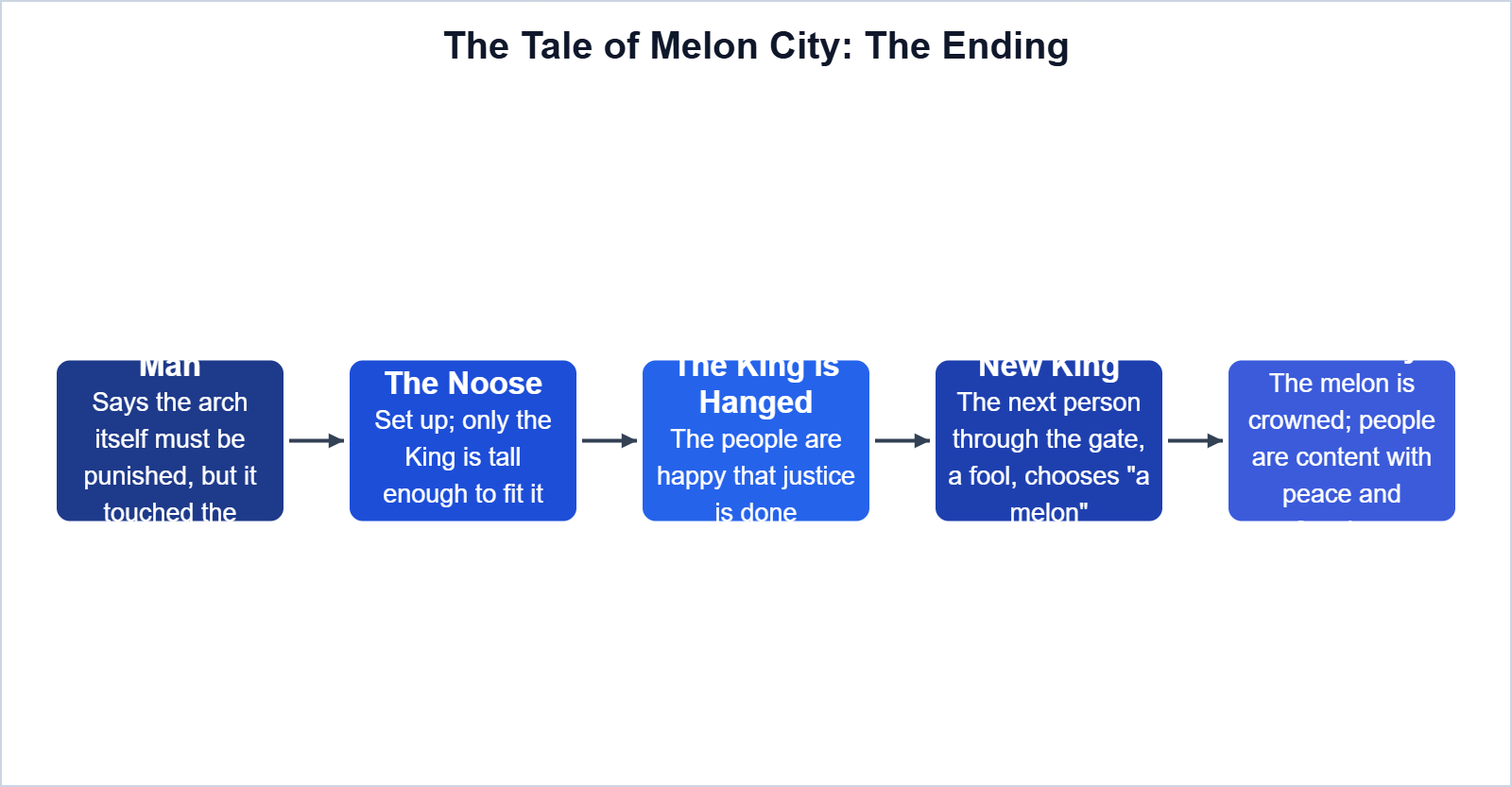
Exam point: The king is hanged because the noose was too high for anyone else; only the king was tall enough to fit it.
4. Theme and Message
- Satire on rulers: Foolish and whimsical rulers make foolish decisions.
- Blind justice: Justice without wisdom leads to absurd results.
- Indifferent people: People are happy with any ruler as long as they are left alone.
Remember: The poem is a satire. It uses humour and irony to criticise the foolishness of rulers and people.
5. Poetic Devices
Device | Example |
|---|---|
Irony | The “just” king is hanged by his own justice |
Humour | The chain of blame and the melon becoming king |
Rhyme | Simple rhyming couplets that make the poem musical |
Narrative style | The poem tells a story like a folk tale |
6. Short Answer Questions
Q1. Why did the king order the arch to be built?
Ans. He wanted to edify (improve the minds of) the people who would pass under it.
Q2. Why did the king order the chief of builders to be hanged?
Ans. The arch was so low that it knocked off the king’s crown, which he considered a disgrace.
Q3. Why was the king himself hanged?
Ans. The people wanted a hanging, but the noose was set too high. Only the king was tall enough to fit it, so he was hanged.
Q4. How did a melon become king?
Ans. By custom, the first person to pass the city gate had to choose the next king. He was an idiot who answered “A melon” to every question, so a melon was crowned.
Q5. Why were the people happy with the melon king?
Ans. They did not care who ruled them, as long as they were left in peace and freedom.
Easy Memory Trick: “Arch, Crown, Blame, Noose, Melon”: the five key events in order.
Conclusion: The Tale of Melon City is a funny satirical poem. Through a silly story, it makes us think about foolish rulers, blind justice and the attitude of ordinary people.