Microbes in Human Welfare – Class 12 Biology Notes
Chapter – 8
Microbes in Human Welfare
1. Microbes in Household Products
Microbes such as bacteria and fungi are used in everyday products. Lactic acid bacteria (LAB), such as Lactobacillus, convert milk into curd; they increase vitamin B12 and check disease-causing microbes in the stomach. Dough for idli, dosa and bread is fermented by bacteria and baker’s yeast (Saccharomyces cerevisiae); the puffed appearance is due to CO2. Toddy is made by fermenting palm sap.

2. Microbes in Industrial Products
- Fermented beverages: brewer’s yeast is used for wine and beer (no distillation) and whisky, brandy and rum (with distillation).
- Antibiotics: chemicals produced by some microbes that kill or retard the growth of disease-causing microbes. Penicillin was the first discovered antibiotic.
- Chemicals, enzymes and bioactive molecules: organic acids, lipases (in detergents), pectinases and proteases (clarifying fruit juices), streptokinase, cyclosporin A and statins.
Remember: Statins act by competitively inhibiting the enzyme responsible for synthesis of cholesterol.
3. Microbes in Sewage Treatment
Sewage is municipal waste water containing large amounts of organic matter and microbes. It is treated in Sewage Treatment Plants (STPs) before being released into natural water bodies.
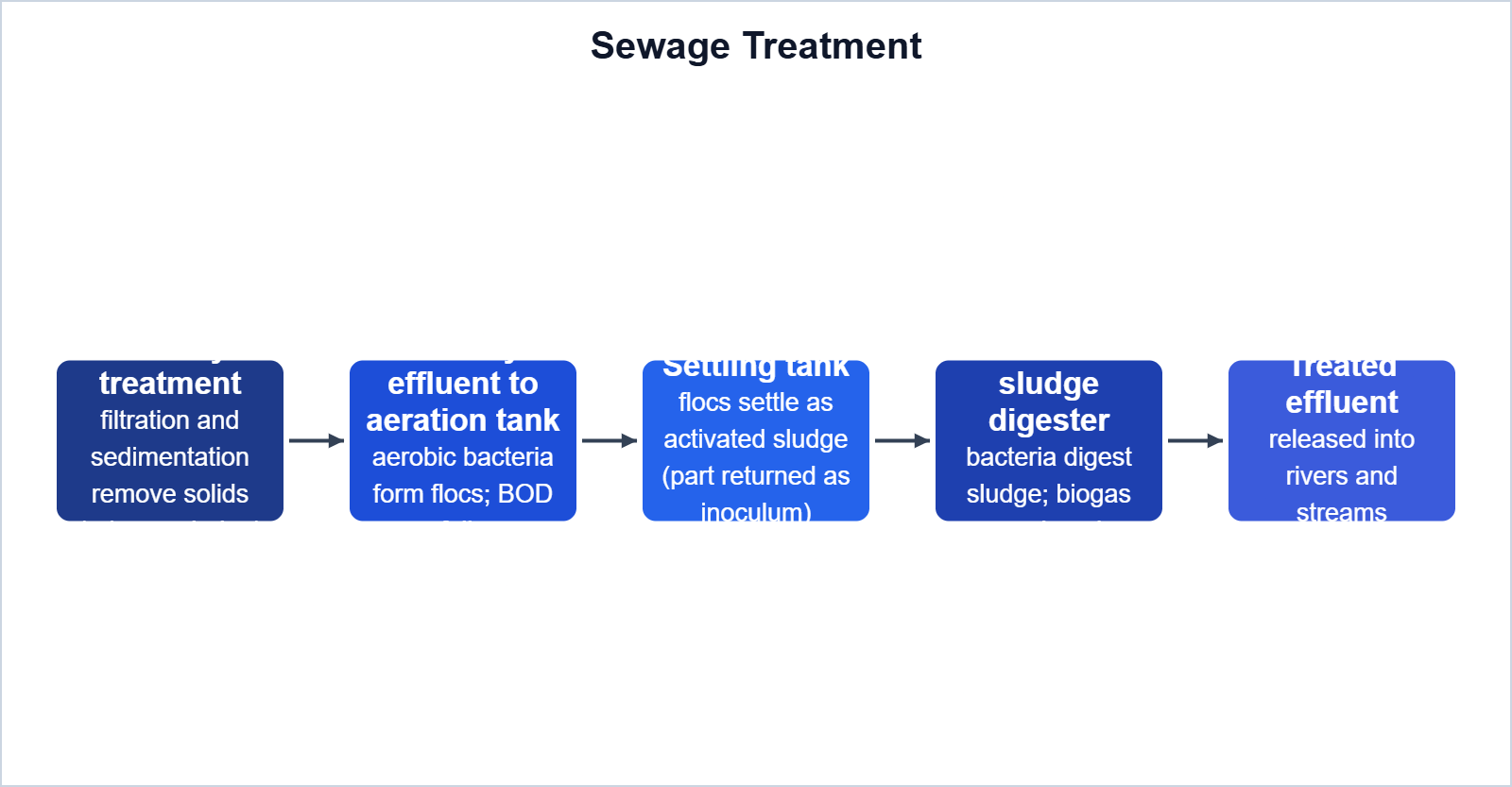
Important: In secondary (biological) treatment, the BOD of the effluent is reduced significantly; the effluent is then passed to a settling tank. The Ministry of Environment and Forests started the Ganga Action Plan and the Yamuna Action Plan to save these rivers from pollution.
4. Microbes in the Production of Biogas
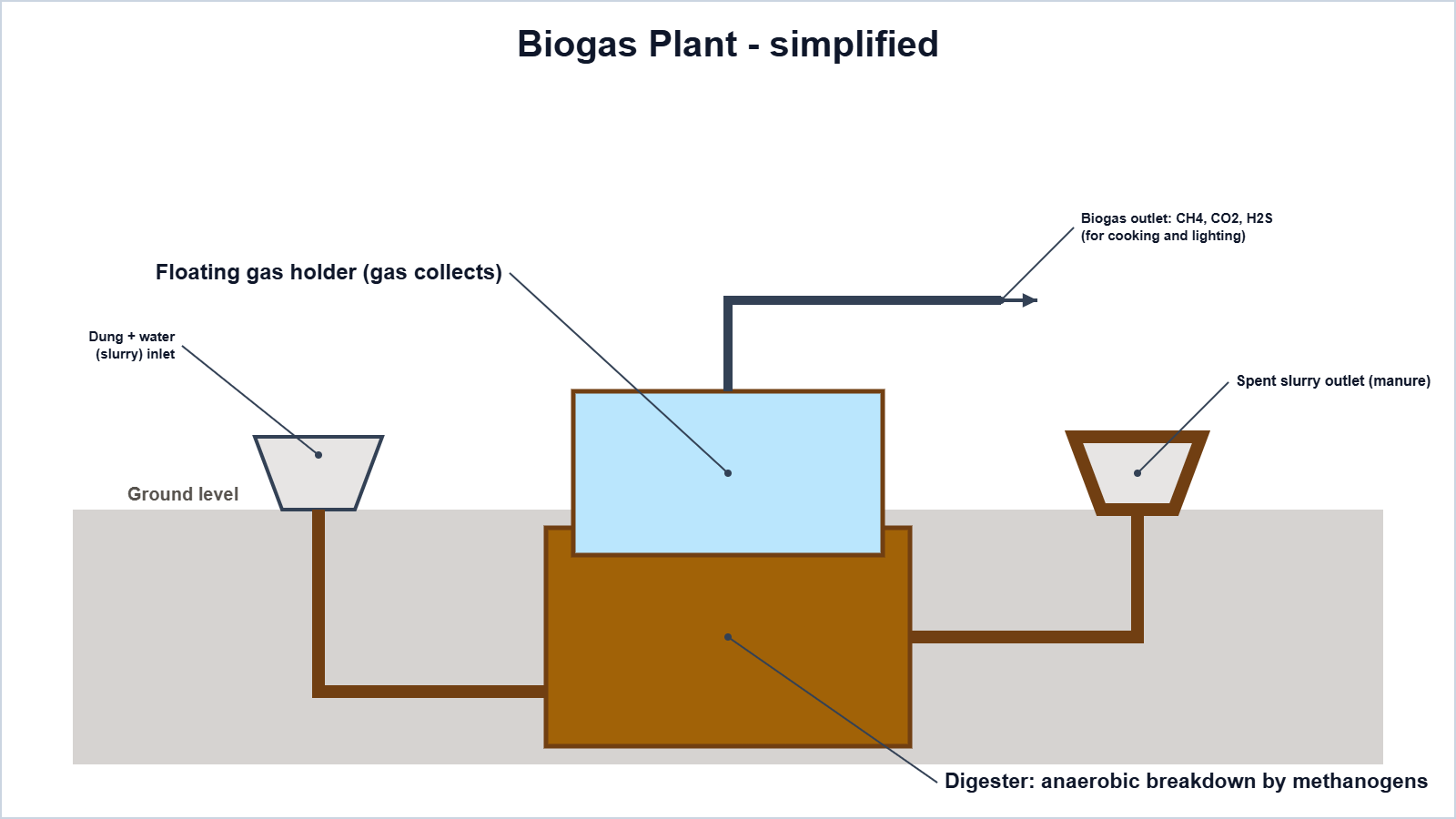
Biogas is a mixture of gases (mainly methane, with CO2 and H2S) produced by microbial activity. Methanogens such as Methanobacterium grow anaerobically on cellulosic material. They are present in the rumen of cattle and in anaerobic sludge. Cattle dung (gobar) is therefore used to make biogas. The technology was developed in India mainly through the efforts of IARI and KVIC.
5. Microbes as Biocontrol Agents
Biocontrol means using biological methods to control plant diseases and pests, reducing the use of harmful chemical pesticides.
Biocontrol agent | Controls |
|---|---|
Ladybird beetle | Aphids |
Dragonflies | Mosquitoes |
Bacillus thuringiensis (Bt) | Butterfly caterpillars (spores sprayed on plants) |
Trichoderma (fungus) | Several plant pathogens in the root ecosystem |
Baculoviruses (Nucleopolyhedrovirus) | Insects and arthropods; species-specific, safe for non-target organisms |
6. Microbes as Biofertilisers
Biofertilisers are organisms that enrich the nutrient quality of the soil.
- Bacteria: symbiotic Rhizobium in root nodules of legumes fixes atmospheric nitrogen; free-living Azospirillum and Azotobacter also fix nitrogen.
- Fungi: mycorrhiza (e.g., Glomus) helps in phosphorus absorption.
- Cyanobacteria: Anabaena, Nostoc and Oscillatoria fix nitrogen, especially in paddy fields, and add organic matter.
Exam point: Organic farming uses biofertilisers and biocontrol agents instead of chemical fertilisers and pesticides.
Easy Memory Trick: Acids from microbes “Citric – Aspergillus, Acetic – Acetobacter, Butyric – Clostridium, Lactic – Lactobacillus”.
7. Important Questions
Q1. How do lactic acid bacteria convert milk to curd?
Ans. LAB produce acids that coagulate and partially digest milk proteins; they also increase vitamin B12 in curd.
Q2. Why does Swiss cheese have large holes?
Ans. Due to the production of a large amount of CO2 by the bacterium Propionibacterium sharmanii.
Q3. Who discovered penicillin?
Ans. Alexander Fleming, from the mould Penicillium notatum; Ernst Chain and Howard Florey established its full potential as an antibiotic.
Q4. What is BOD?
Ans. Biochemical oxygen demand: the amount of oxygen consumed if all the organic matter in one litre of water were oxidised by bacteria; it measures organic pollution.
Q5. What are flocs?
Ans. Masses of bacteria associated with fungal filaments forming mesh-like structures in the aeration tank during secondary treatment.
Q6. Name the bacteria that produce biogas and where they are found.
Ans. Methanogens such as Methanobacterium; they occur in anaerobic sludge and in the rumen of cattle.
Q7. Name two biocontrol agents and their targets.
Ans. Ladybird beetles (aphids) and Bacillus thuringiensis (butterfly caterpillars).
Q8. What are biofertilisers? Give two examples.
Ans. Organisms that enrich soil nutrients; e.g., Rhizobium (fixes nitrogen in root nodules) and cyanobacteria like Anabaena and Nostoc (in paddy fields).
Q9. How does mycorrhiza help plants?
Ans. The fungus (e.g., Glomus) absorbs phosphorus from soil and passes it to the plant, also giving resistance to root pathogens and tolerance to drought.
Q10. What is the use of streptokinase?
Ans. It is used as a clot buster to remove clots from blood vessels of patients with myocardial infarction.
Conclusion: Microbes are useful in making food, medicines and industrial products, in treating sewage, producing biogas, and in eco-friendly agriculture as biocontrol agents and biofertilisers.