Human Health and Disease – Class 12 Biology Notes
Chapter – 7
Human Health and Disease
1. Health and Disease
Health is a state of complete physical, mental and social well-being. Health is affected by genetic disorders, infections and lifestyle (food, water, rest, exercise, habits). Diseases that spread from one person to another are infectious diseases; others are non-infectious (such as cancer).
2. Common Diseases in Humans
Disease-causing organisms are called pathogens: bacteria, viruses, fungi, protozoans and helminths.
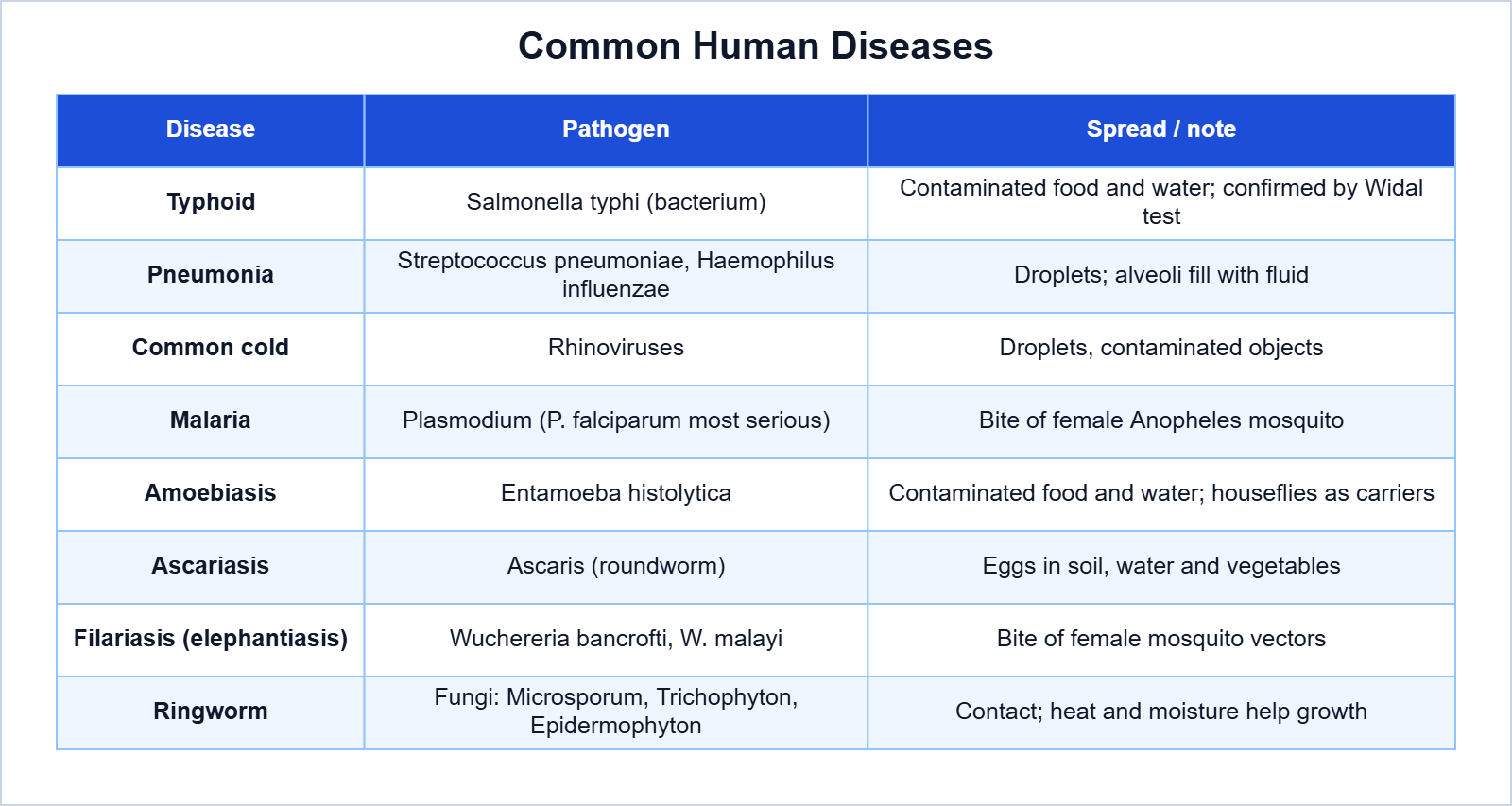
Typhoid causes sustained high fever (39-40°C), weakness, stomach pain and loss of appetite; intestinal perforation may occur in severe cases. A cook called Mary Mallon (Typhoid Mary) was a famous carrier who spread typhoid for years.
Malaria:
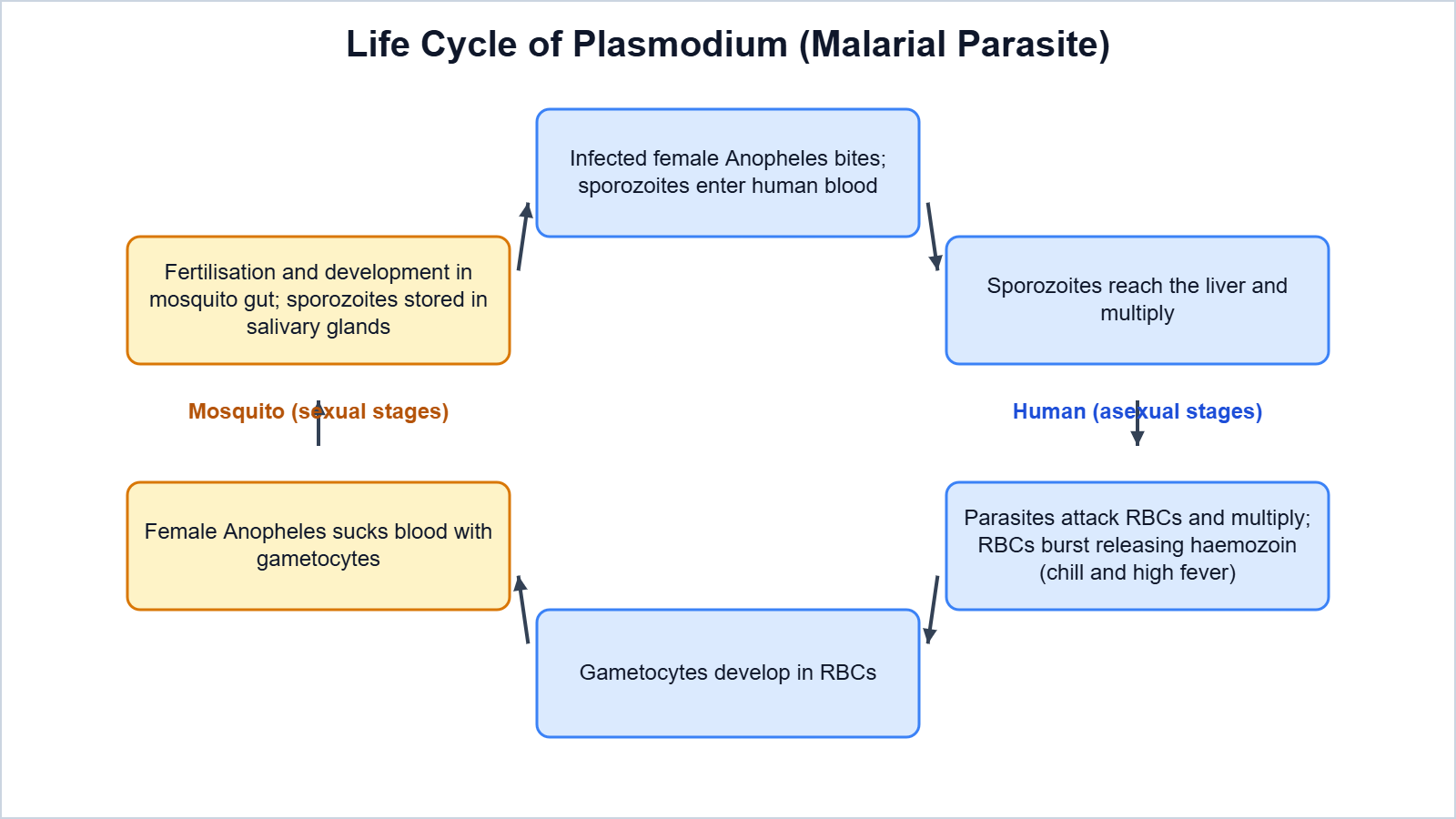
Remember: Plasmodium needs two hosts: humans (intermediate host, asexual reproduction) and the female Anopheles mosquito (vector, sexual reproduction).
Prevention and control: personal hygiene, clean drinking water, proper disposal of waste, avoiding contact with infected persons, and controlling vectors (removing stagnant water, using mosquito nets, introducing fish like Gambusia that feed on mosquito larvae, spraying insecticides).
3. Immunity
Innate immunity barrier | Examples |
|---|---|
Physical | Skin; mucus coating of respiratory, digestive and urogenital tracts |
Physiological | Acid in stomach, saliva, tears |
Cellular | Leukocytes (neutrophils, monocytes), natural killer cells, macrophages |
Cytokine | Interferons secreted by virus-infected cells protect other cells |
Acquired immunity is pathogen-specific and has memory. The first encounter produces a low-intensity primary response; a later encounter produces a strong secondary (anamnestic) response. It is carried out by B-lymphocytes (produce antibodies; humoral immunity) and T-lymphocytes (cell-mediated immunity, responsible for graft rejection).

Types of antibodies: IgA, IgM, IgE and IgG. Vaccination introduces inactivated or weakened pathogens (or antigenic proteins) to produce memory cells. Recombinant DNA technology has produced vaccines such as the hepatitis B vaccine from yeast.
Allergies are exaggerated responses to allergens; they are treated with antihistamines, adrenalin and steroids. Auto-immunity is when the body attacks its own cells, as in rheumatoid arthritis.
Lymphoid organs: primary (bone marrow, thymus) where lymphocytes mature; secondary (spleen, lymph nodes, tonsils, Peyer’s patches, appendix) where lymphocytes interact with antigens. MALT forms about 50% of the lymphoid tissue in the body.
4. AIDS
AIDS (Acquired Immuno Deficiency Syndrome) was first reported in 1981. It is caused by HIV, a retrovirus with an RNA genome. It spreads through sexual contact with an infected person, transfusion of contaminated blood, sharing infected needles, and from an infected mother to her child through the placenta.
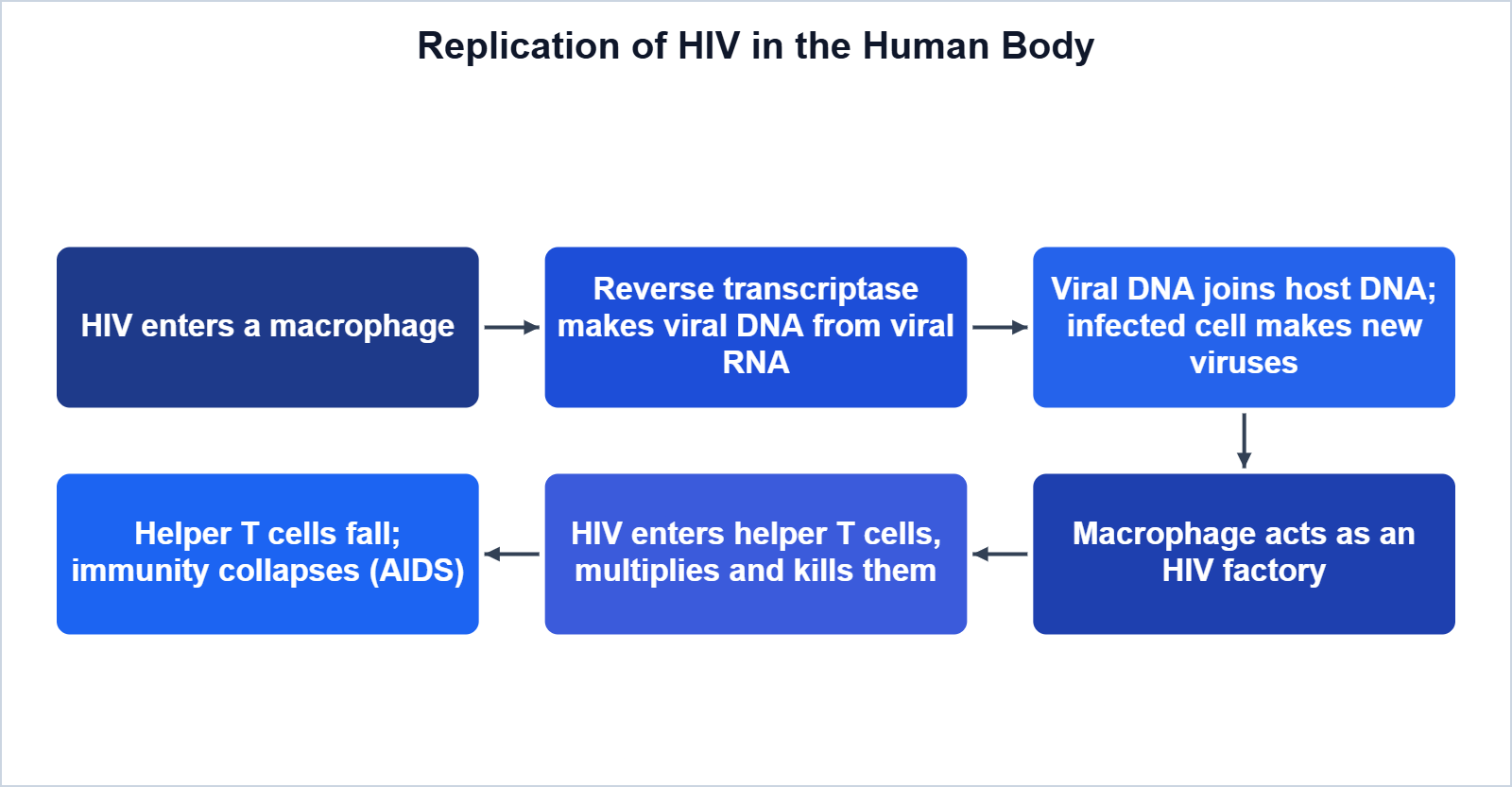
Diagnosis is by ELISA. Antiretroviral drugs are only partially effective; they prolong life but cannot cure AIDS. Prevention involves blood screening, use of disposable needles, condoms and awareness programmes (NACO).
5. Cancer
Normal cells show contact inhibition; cancer cells lose it and divide uncontrollably, forming tumours. Benign tumours stay confined; malignant tumours invade and spread to distant sites (metastasis).
Causes (carcinogens): ionising radiation (X-rays, gamma rays), non-ionising UV rays, chemicals in tobacco smoke, and oncogenic viruses. Cellular oncogenes (proto-oncogenes) may become activated and cause cancer.
Detection: biopsy and histopathology, blood and bone marrow tests, radiography, CT, MRI, and antibodies against cancer-specific antigens. Treatment: surgery, radiation therapy, chemotherapy and immunotherapy (biological response modifiers such as alpha-interferon).
6. Drugs and Alcohol Abuse
Group | Source and example | Effect |
|---|---|---|
Opioids | Heroin (smack), from morphine of poppy (Papaver somniferum) | Depressant; slows body functions |
Cannabinoids | Cannabis sativa: marijuana, hashish, charas, ganja | Affect the cardiovascular system |
Coca alkaloid | Cocaine from Erythroxylum coca | Interferes with dopamine transport; stimulates CNS |
Hallucinogens | Atropa belladonna, Datura | Hallucinations |
Tobacco contains nicotine, which stimulates the adrenal gland to release adrenaline and noradrenaline, raising blood pressure and heart rate. Smoking increases carbon monoxide in blood and is linked to cancers of the lung, throat and mouth.
Prevention: avoid undue peer pressure, education and counselling, seeking help from parents and peers, recognising danger signs and seeking professional and medical help. Adolescence (12-18 years) is a vulnerable period.
Easy Memory Trick: Antibody classes “G-A-M-E (D)”: IgG, IgA, IgM, IgE (and IgD).
7. Important Questions
Q1. Which test confirms typhoid?
Ans. The Widal test.
Q2. Why does a malaria patient get chills and high fever?
Ans. When infected RBCs burst, a toxic substance called haemozoin is released, causing chills and high fever recurring every three to four days.
Q3. Name the lymphoid organs.
Ans. Primary: bone marrow and thymus; secondary: spleen, lymph nodes, tonsils, Peyer’s patches, appendix and MALT.
Q4. Differentiate between active and passive immunity.
Ans. Active immunity is produced by the body’s own antibodies after exposure to antigens (slow, long-lasting); passive immunity is given by ready-made antibodies (quick, short-lived), e.g., colostrum.
Q5. Describe the structure of an antibody.
Ans. It has four polypeptide chains, two heavy and two light (H2L2), joined by disulphide bonds; tips form antigen-binding sites.
Q6. What is an allergy? Which antibody is involved?
Ans. An exaggerated immune response to certain antigens (allergens) like dust or pollen; IgE antibodies are produced and chemicals like histamine and serotonin are released.
Q7. Why is the macrophage called the HIV factory?
Ans. Because after infection, the macrophage keeps producing HIV particles while it survives.
Q8. How is AIDS diagnosed?
Ans. By ELISA (enzyme-linked immunosorbent assay).
Q9. Distinguish between benign and malignant tumours.
Ans. Benign tumours stay at their place and cause little damage; malignant tumours grow fast, invade tissues and spread (metastasis).
Q10. Name the source plant of cocaine and the effect of cocaine.
Ans. Erythroxylum coca; it interferes with the transport of the neurotransmitter dopamine and stimulates the central nervous system.
Conclusion: Knowledge of pathogens, immunity, AIDS, cancer and the harmful effects of drugs helps us prevent diseases and lead healthy lives.