Chapter – 10
Biotechnology and its Applications
1. Applications in Agriculture
Three options can increase food production: agro-chemical based agriculture, organic agriculture, and genetically engineered crop-based agriculture. Plants, bacteria, fungi and animals whose genes have been altered are called genetically modified organisms (GMOs).
Benefits of GM plants: more tolerant to abiotic stresses (cold, drought, salt, heat); reduced reliance on chemical pesticides (pest-resistant crops); reduced post-harvest losses; increased efficiency of mineral use by plants; enhanced nutritional value, e.g., Golden rice, which is rich in vitamin A.
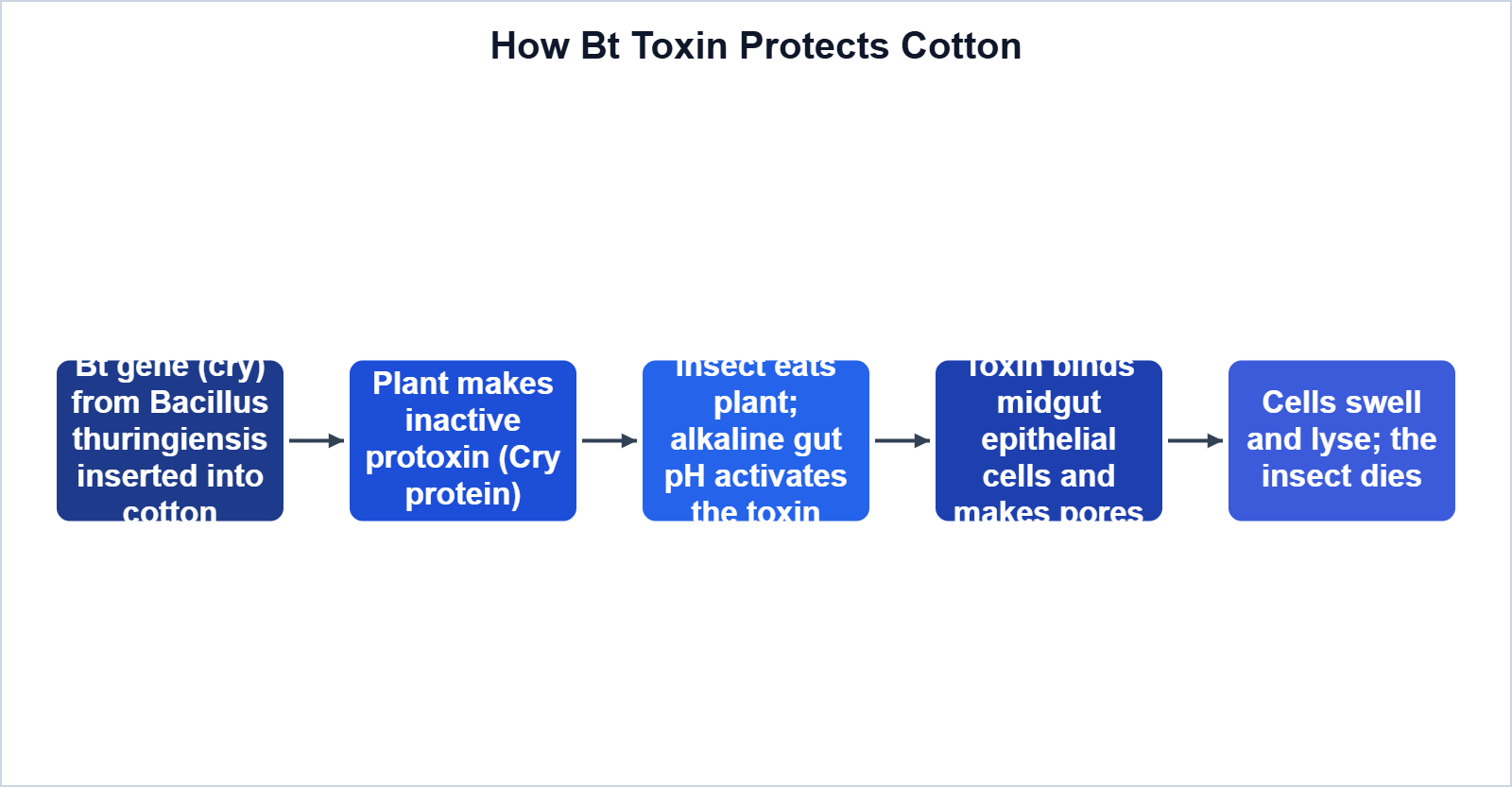
Bt cotton:
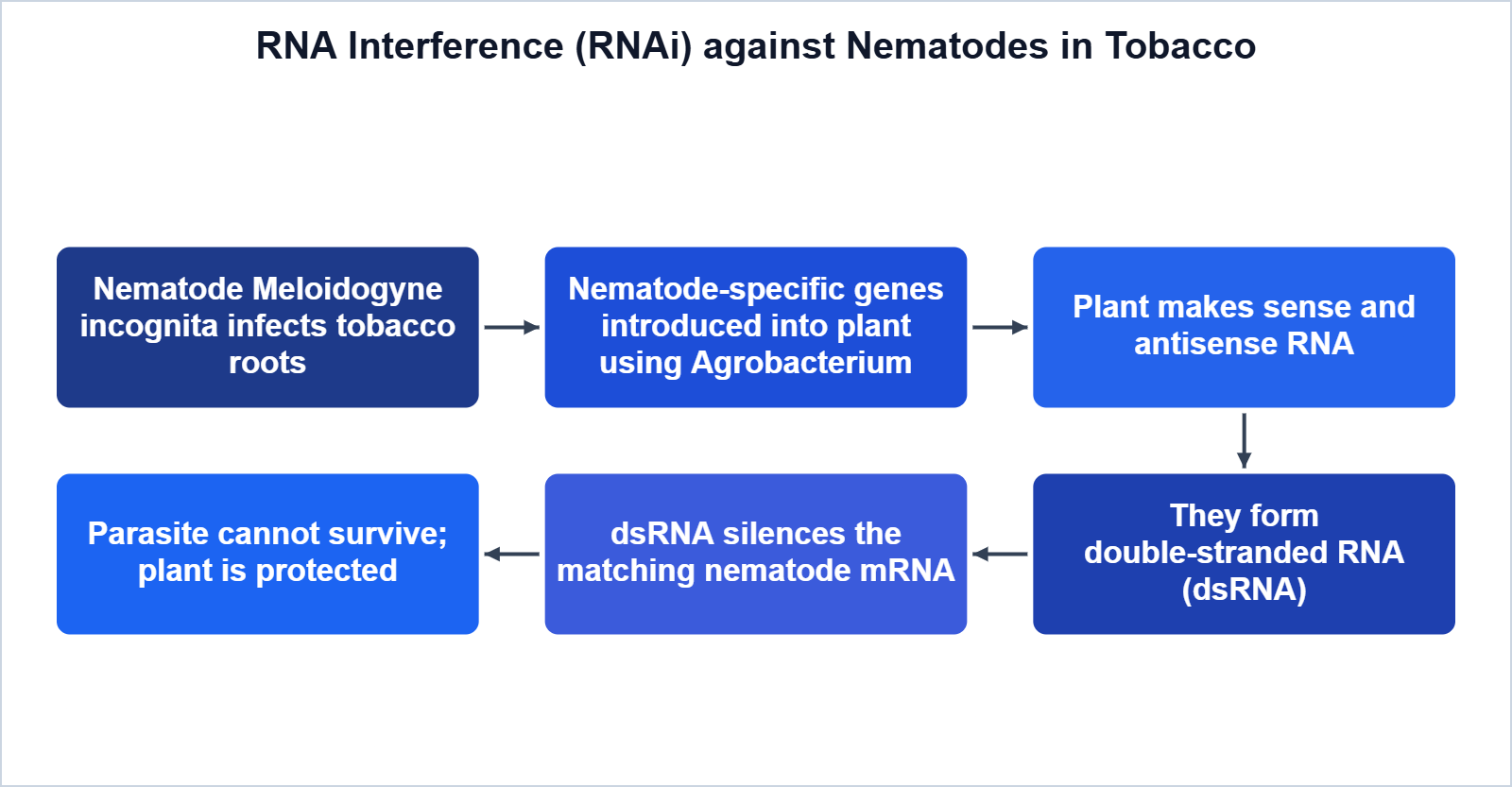
Pest-resistant plants (RNAi):
2. Applications in Medicine
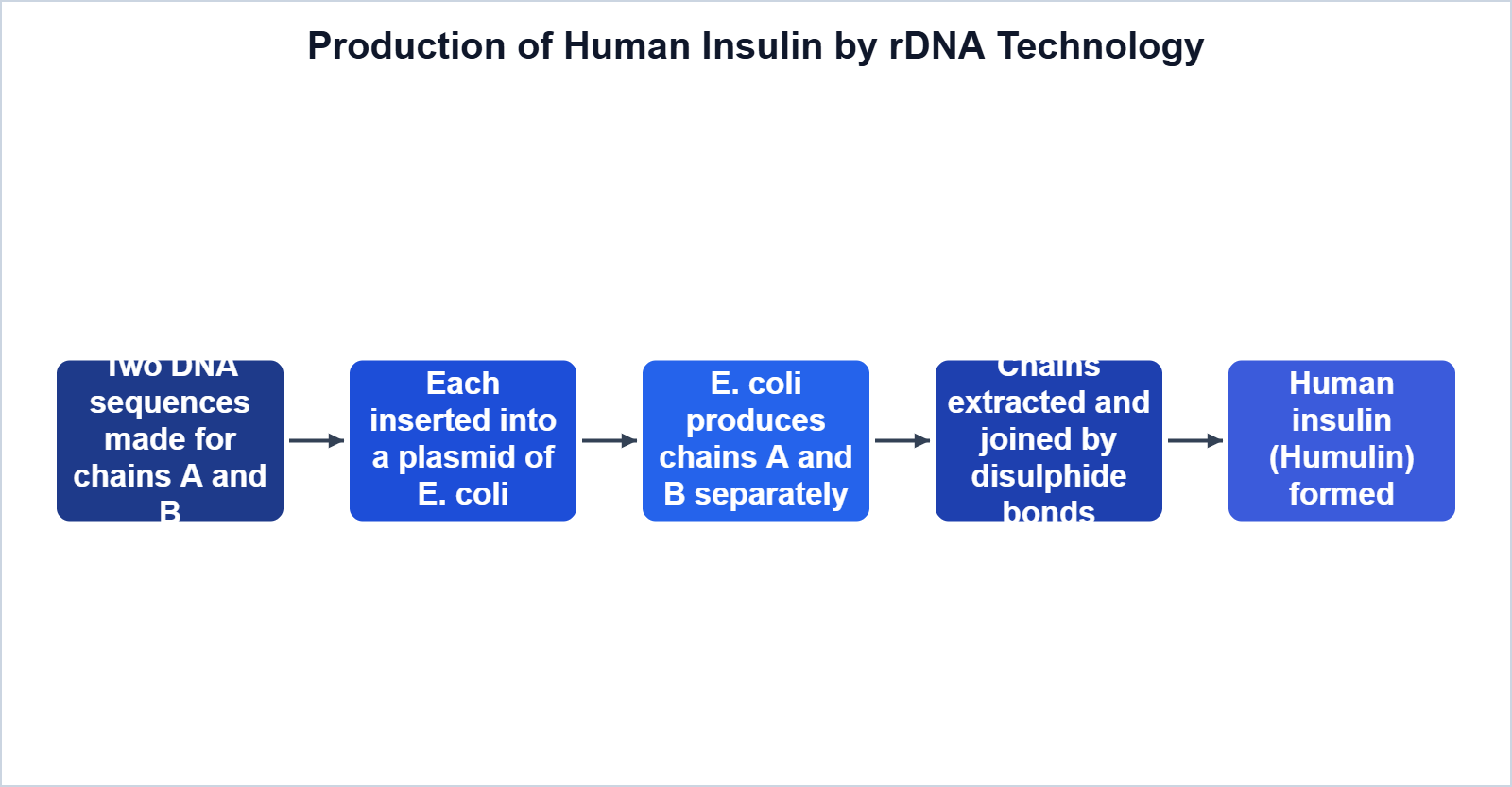
Genetically engineered insulin: Insulin has two short polypeptide chains, A and B, linked by disulphide bridges. In mammals, it is made as pro-hormone (proinsulin) with an extra C-peptide, which is removed.
Gene therapy is correcting a gene defect by delivering a normal gene into the person’s cells. The first clinical gene therapy (1990) was for adenosine deaminase (ADA) deficiency. Lymphocytes from the patient were grown, a functional ADA cDNA was introduced using a retroviral vector, and the cells were returned to the patient. Since lymphocytes are not immortal, periodic infusion is needed; a permanent cure may be possible if the gene is introduced into bone marrow cells at early embryonic stages.
Molecular diagnosis: PCR detects very low amounts of pathogen DNA or RNA (e.g., HIV in suspected AIDS patients, mutations in suspected cancer patients). ELISA is based on antigen-antibody interaction. A radioactively labelled single-stranded DNA or RNA probe can detect a mutated gene by hybridisation and autoradiography.
3. Transgenic Animals
Animals whose DNA has been manipulated to carry and express a foreign gene are transgenic animals. Over 95% of existing transgenic animals are mice. They are used to study normal physiology and development, study diseases, produce biological products (such as human proteins), test vaccine safety and test chemical safety (toxicity).
Example: Rosie (1997), the first transgenic cow, produced human protein-enriched milk containing human alpha-lactalbumin.
4. Ethical Issues
Genetic modification may have unpredictable effects. The Indian Government set up the GEAC (Genetic Engineering Appraisal Committee) to judge the validity of GM research and the safety of GM organisms for public services.
Biopiracy and patents: Patents on Basmati rice, turmeric and neem by foreign companies raised concerns. India has about 27 documented varieties of Basmati. The Indian Parliament amended the Indian Patents Bill to address issues of patent terms, emergency provisions and research and development initiatives.
Application | Example |
|---|---|
Pest resistance | Bt cotton, Bt corn; RNAi tobacco |
Nutrition | Golden rice (vitamin A) |
Medicine | Human insulin, ADA gene therapy |
Diagnosis | PCR, ELISA, DNA probes |
Transgenic animals | Rosie the cow; transgenic mice for research |
Exam point: In Bt cotton, the toxin is activated only in the alkaline gut of the insect.
Easy Memory Trick: “Bt – bollworm; RNAi – root nematode; Insulin – A and B chains.”
5. Important Questions
Q1. Why does Bt toxin not kill the bacterium that produces it?
Ans. The toxin exists as an inactive protoxin in the bacterium; it becomes active only in the alkaline pH of the insect gut.
Q2. Name the cry genes used in Bt cotton and corn.
Ans. cryIAc and cryIIAb control cotton bollworms; cryIAb controls corn borer.
Q3. What is RNA interference?
Ans. A method of cellular defence in which a complementary double-stranded RNA binds to and prevents translation of a specific mRNA (silencing).
Q4. Why was insulin from animals a problem, and how was it solved?
Ans. Animal insulin caused allergies in some patients; in 1983, Eli Lilly produced human insulin by making A and B chains in E. coli separately and joining them.
Q5. What is the C-peptide?
Ans. An extra stretch in proinsulin that is removed during maturation into insulin.
Q6. Describe the first gene therapy trial.
Ans. In 1990, a 4-year-old girl with ADA deficiency was treated with her own lymphocytes into which a functional ADA cDNA was introduced using a retroviral vector.
Q7. Name three techniques of molecular diagnosis.
Ans. PCR, ELISA and recombinant DNA probes with autoradiography.
Q8. What was special about Rosie?
Ans. Rosie (1997) was the first transgenic cow; she produced milk containing human alpha-lactalbumin, nutritionally more balanced for human babies.
Q9. What is GEAC?
Ans. The Genetic Engineering Appraisal Committee of the Government of India, which decides on the validity of GM research and the safety of introducing GM organisms for public use.
Q10. What is biopiracy?
Ans. Use of bio-resources or traditional knowledge of a country by multinational companies without proper authorisation and compensation.
Conclusion: Biotechnology has improved agriculture, medicine and research through GM crops, recombinant drugs, gene therapy, diagnostics and transgenic animals, but it must be guided by ethical and legal safeguards.