Data Dictionary
In a database environment, the Data Dictionary (often called the System Catalog) acts as the “brain” or the central repository of metadata—data about data.
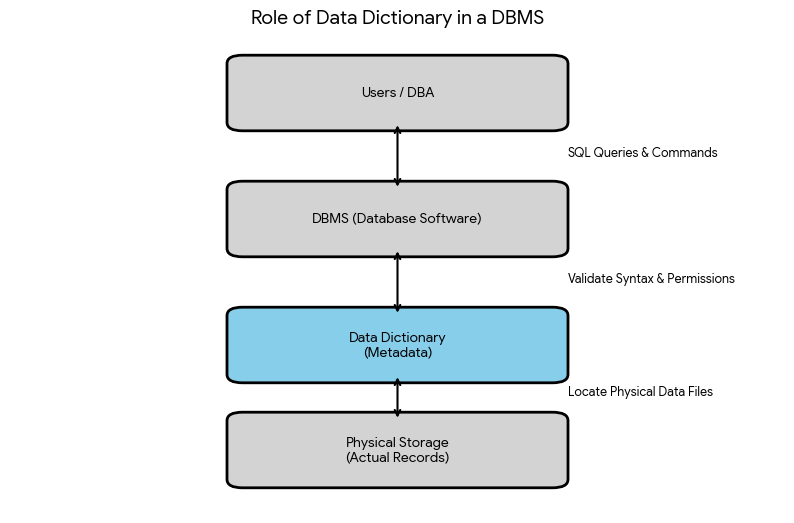
Key Information Stored
A typical data dictionary includes:
- Table and Field Definitions: Names, data types (integer, string, date), and sizes of every column.
- Relationships: Definitions of primary keys and foreign keys that link tables together.
- Constraints: Rules such as validation checks (e.g., age must be > 18) and nullability (whether a field can be empty).
- Access Permissions: Information on which users or roles have permission to view or modify specific data.