Classification of Software
Software is a collection of instructions, data, or programs used to operate computers and execute specific tasks. While hardware is the physical part of a computer, software is the virtual part that tells the hardware what to do.
It is generally divided into two main categories: System Software and Application Software.
1. System Software
This acts as the foundation for your computer. It manages the hardware and provides a platform for other software to run.
- Operating System (OS): The most critical software (e.g., Windows, macOS, Linux, Android) that manages all other programs and hardware.
- Utility Software: Tools designed to maintain and protect the system, such as antivirus programs, disk defragmenters, and file compression tools.
- Device Drivers: Small programs that allow specific hardware (like your printer or graphics card) to communicate with the OS.
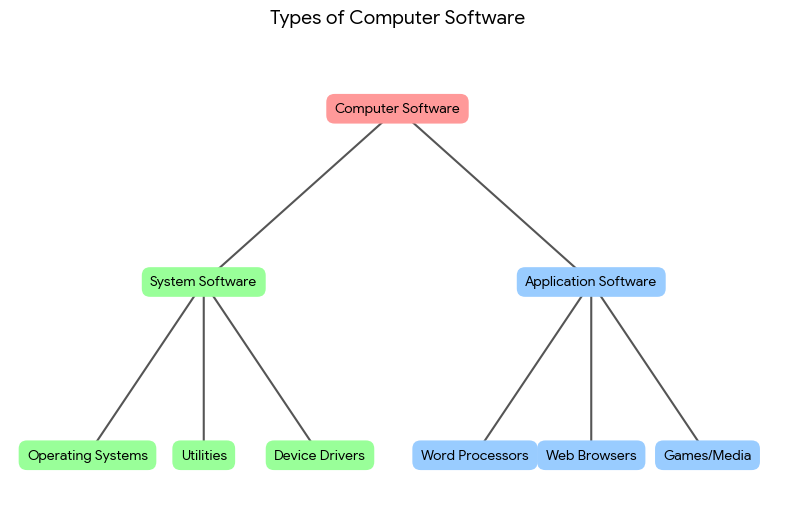
2. Application Software
This is “end-user” software designed to help people perform specific tasks.
- General Purpose: Broadly used tools like web browsers (Chrome), word processors (Microsoft Word), or spreadsheets (Excel).
- Specialized: Software built for specific professional tasks, like video editing (Adobe Premiere) or accounting (QuickBooks).
- Customized: Tailor-made software created specifically for a particular organization’s needs.