Microphones and its types
A microphone is an electronic input device that converts sound waves into electrical signals. It is used in computers, mobile phones, radio stations, studios, public speaking systems, and recording devices.
Working of a Microphone
When a person speaks, sound waves strike the diaphragm of the microphone. The diaphragm vibrates and converts the sound energy into electrical signals, which are then amplified or recorded.
Types of Microphones
1. Dynamic Microphone
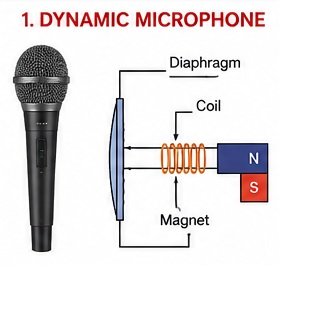
A dynamic microphone works on the principle of electromagnetic induction. It contains a diaphragm attached to a coil placed near a magnet. When sound waves hit the diaphragm, the coil moves and produces electrical signals.
Features/ Characteristics
- Strong and durable
- Handles loud sounds easily
- Does not require external power
Uses
- Stage performances
- Public speaking
- Live concerts
2. Condenser Microphone
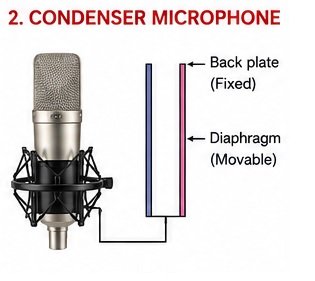
A condenser microphone uses a capacitor system with two plates. One plate vibrates when sound waves strike it, producing electrical signals.
Features/ Characteristics
- Very sensitive
- Produces clear and high-quality sound
- Requires external power supply
Uses
- Recording studios
- Broadcasting
- Podcasting
3. Ribbon Microphone
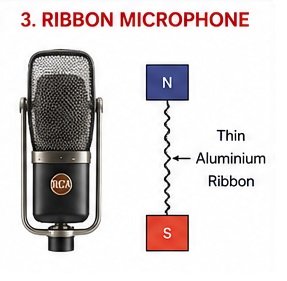
A ribbon microphone contains a thin metal ribbon placed between magnets. The ribbon vibrates with sound waves and generates electrical signals.
Features/ Characteristics
- Produces smooth and natural sound
- Sensitive to delicate sounds
Uses
- Music recording
- Radio stations
- Professional studios
4. Wireless Microphone
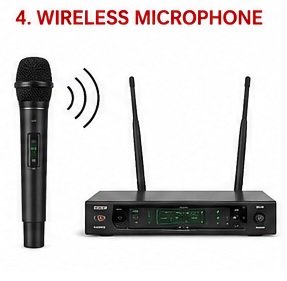
A wireless microphone transmits sound signals without wires using radio frequencies or Bluetooth technology.
Features/ Characteristics
- Portable and easy to move
- No cable connection needed
Uses
- TV shows
- Stage programs
- Meetings and presentations
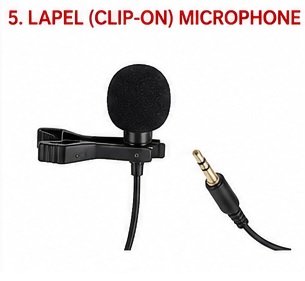
5. Lapel (Clip-on) Microphone
A lapel microphone is a small microphone clipped to clothes near the speaker’s mouth.
Features/ Characteristics
- Small and lightweight
- Hands-free operation
Uses
- Interviews
- News reporting
- Online teaching