Concept of Email
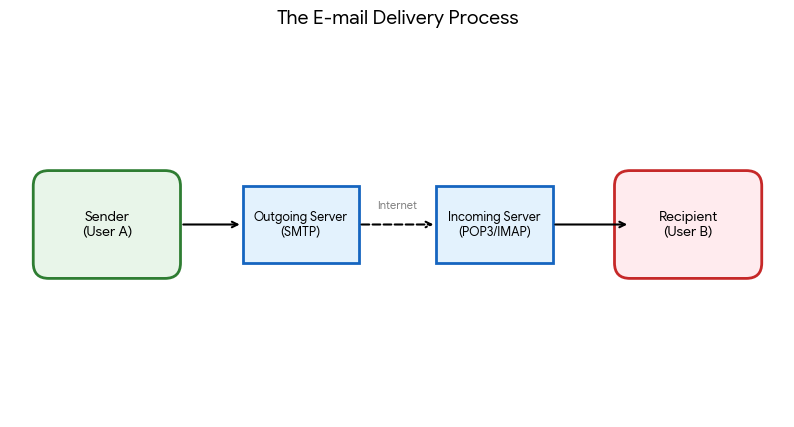
E-mail (Electronic Mail) is a method of exchanging digital messages between people over the internet. It works like a digital version of traditional mail, where messages are sent from a sender’s “mailbox” to a recipient’s “mailbox” almost instantly.
How E-mail Works (Diagram)
Advantages of E-mail
- Speed: Messages are delivered globally in seconds or minutes.
- Cost-Effective: Most e-mail services (like Gmail or Outlook) are free to use.
- Convenience: You can send messages to multiple people at once and attach files like photos or documents.
- Record Keeping: It creates a permanent written trail of conversations which is useful for business and legal purposes.
- Environmentally Friendly: It reduces the need for paper, envelopes, and physical transport.
Disadvantages of E-mail
- Spam: Users often receive “junk” or unsolicited advertisements that clutter the inbox.
- Viruses & Phishing: E-mails can contain malicious attachments or links designed to steal personal information.
- Misunderstanding: Without tone of voice or body language, text-only messages can sometimes be misinterpreted.
- Information Overload: Managing a high volume of e-mails daily can be time-consuming and stressful.
- Internet Dependency: You cannot send or receive e-mails without an active internet connection.