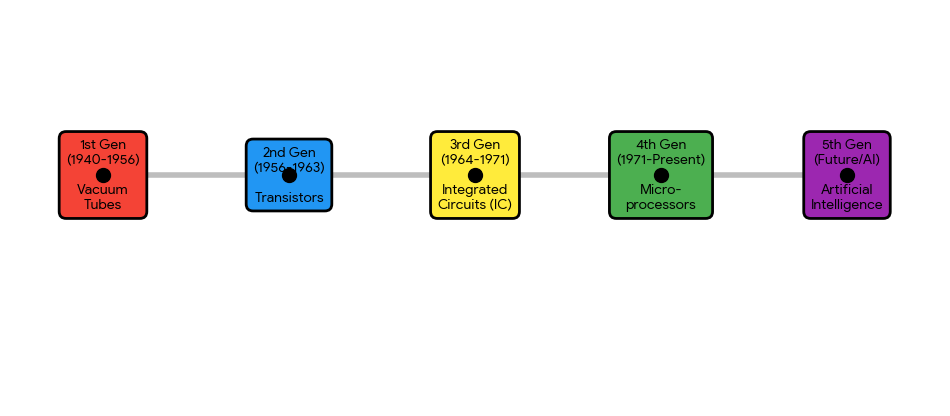
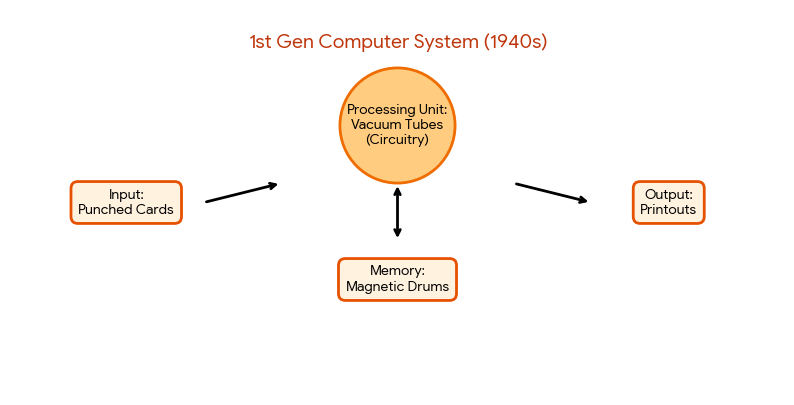
- First Generation of Computer:The First Generation of Computers (1940–1956) was characterized by the use of vacuum tubes for circuitry and magnetic drums for memory. These machines were massive, incredibly expensive to operate, and consumed enormous amounts of electricity. Examples: ENIAC & EDVAC.
 Key Features
- Technology: Vacuum tubes.
- Language: Machine language (binary: 0s and 1s).
- Input/Output: Punched cards for input and printouts for output.
- Size: Often occupied entire rooms (e.g., ENIAC was 30 tons).
- Drawbacks: Generated intense heat, frequent hardware failures, and no multitasking.
- Second Generation of Computer: The Second Generation of Computers (1956–1963) marked a major turning point in technology when transistors replaced vacuum tubes. This change made computers significantly smaller, faster, cheaper, and more energy-efficient. Examples: IBM 1401, IBM 7094 & CDC 1604.
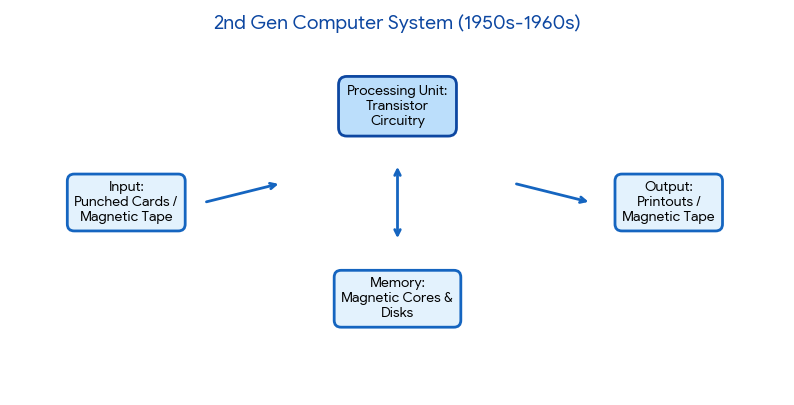
- Technology: Transistors were used for circuitry.
- Primary Memory: Magnetic cores were introduced for primary memory storage.
- Secondary Storage: Magnetic tapes and magnetic disks were used to store data.
- Programming: Shifted from machine language to Assembly language.
- Efficiency: Generated much less heat and were more reliable.
3. Third Generation of Computer: The Third Generation of Computers (1964–1971) was defined by the invention of the Integrated Circuit (IC). A single IC (or “chip”) could contain hundreds of transistors, making computers even smaller, more powerful, and significantly more reliable. Examples: IBM 360 SERIES & HONEYWELL-6000 SERIES.
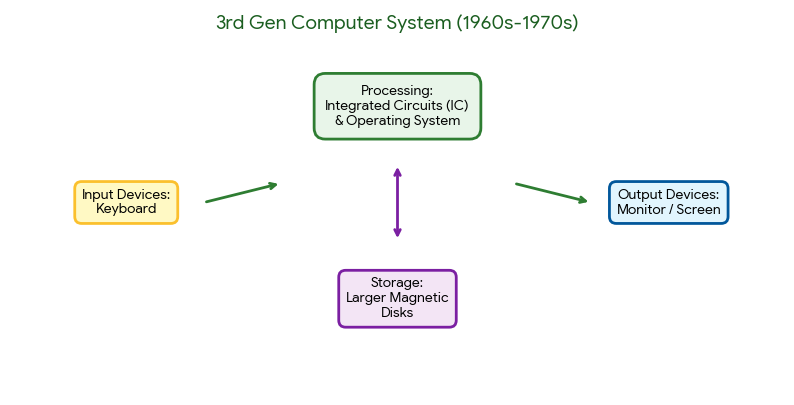
- Technology: Integrated Circuits (ICs) replaced individual transistors.
- Input/Output: For the first time, users interacted with computers through keyboards and monitors instead of punched cards and printouts.
- Software: The introduction of the Operating System (OS) allowed machines to run many different applications at once (multitasking).
- Size & Cost: They were small enough to be called “minicomputers”.
- Languages: High-level languages like Pascal and BASIC became popular.
4. Fourth Generation of Computer:
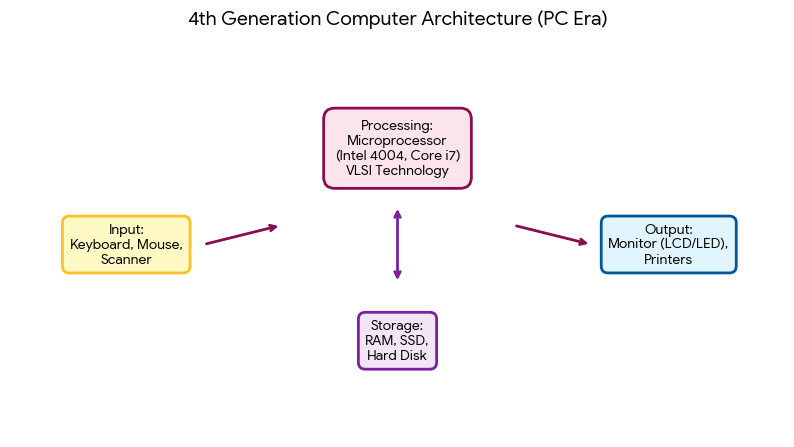
- Technology: VLSI Microprocessors (a whole CPU on one chip).
- Size: Extremely small and portable (laptops, handhelds).
- Input/Output: Introduction of the Mouse, GUI (Graphical User Interface), and high-resolution monitors.
- Networking: Rise of Local Area Networks (LAN) and the Internet.
- Languages: Modern high-level languages like C, C++, and Java.
- Storage: Shift to semiconductor memory (RAM) and large-capacity hard disks/optical disks.
5. Fifth Generation of Computer: The Fifth Generation of Computers (Present and Beyond) is defined by Artificial Intelligence (AI) and Ultra Large Scale Integration (ULSI). Unlike previous generations that focused on raw hardware speed, the fifth generation focuses on making computers think, learn, and interact like humans. Examples: AI SYSTEM & ROBOTICS.
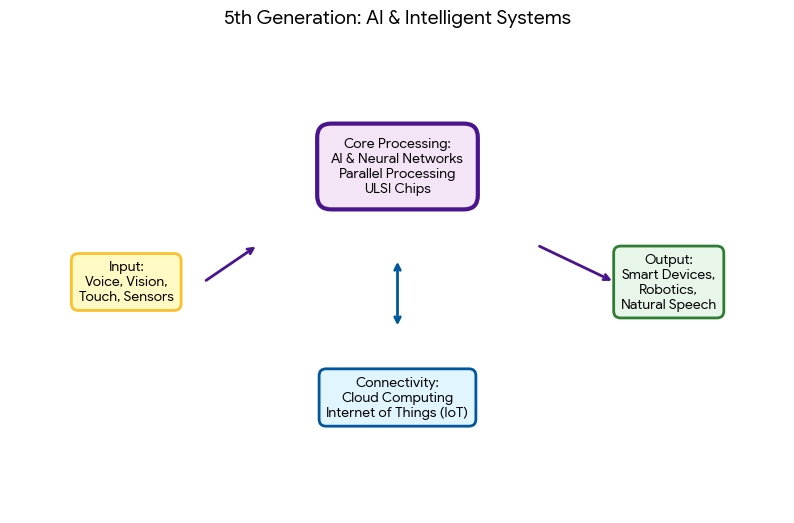
- Technology: ULSI (Ultra Large Scale Integration) allows millions of components on a single chip.
- Processing: Parallel Processing allows the computer to perform multiple tasks at the exact same time, similar to the human brain.
- Capabilities: Voice recognition, natural language processing (like ChatGPT), and self-learning (Machine Learning).
- Computing Types: Quantum computing and Nanotechnology are emerging as part of this generation.
- Goal: To develop devices that respond to natural language and are capable of self-organisation.