CHAPTER 16
BIO-DIVERSITY & CONSERVATION
1. Biodiversity
Biodiversity means the variety of life on Earth. The word is made up of two words: Bio + Diversity. “Bio” means life and “diversity” means variety.
Biodiversity includes the variety of:
- Plants
- Animals
- Microorganisms
- Genes within organisms
- Ecosystems
It refers to the number and variety of living organisms found in a particular geographical area. Biodiversity is important because different organisms are connected with one another and with their environment.
In simple words:
Biodiversity = Variety of living organisms in a particular area.
2. Levels of Biodiversity
There are three major levels of biodiversity:
- Genetic Diversity
- Species Diversity
- Ecosystem Diversity
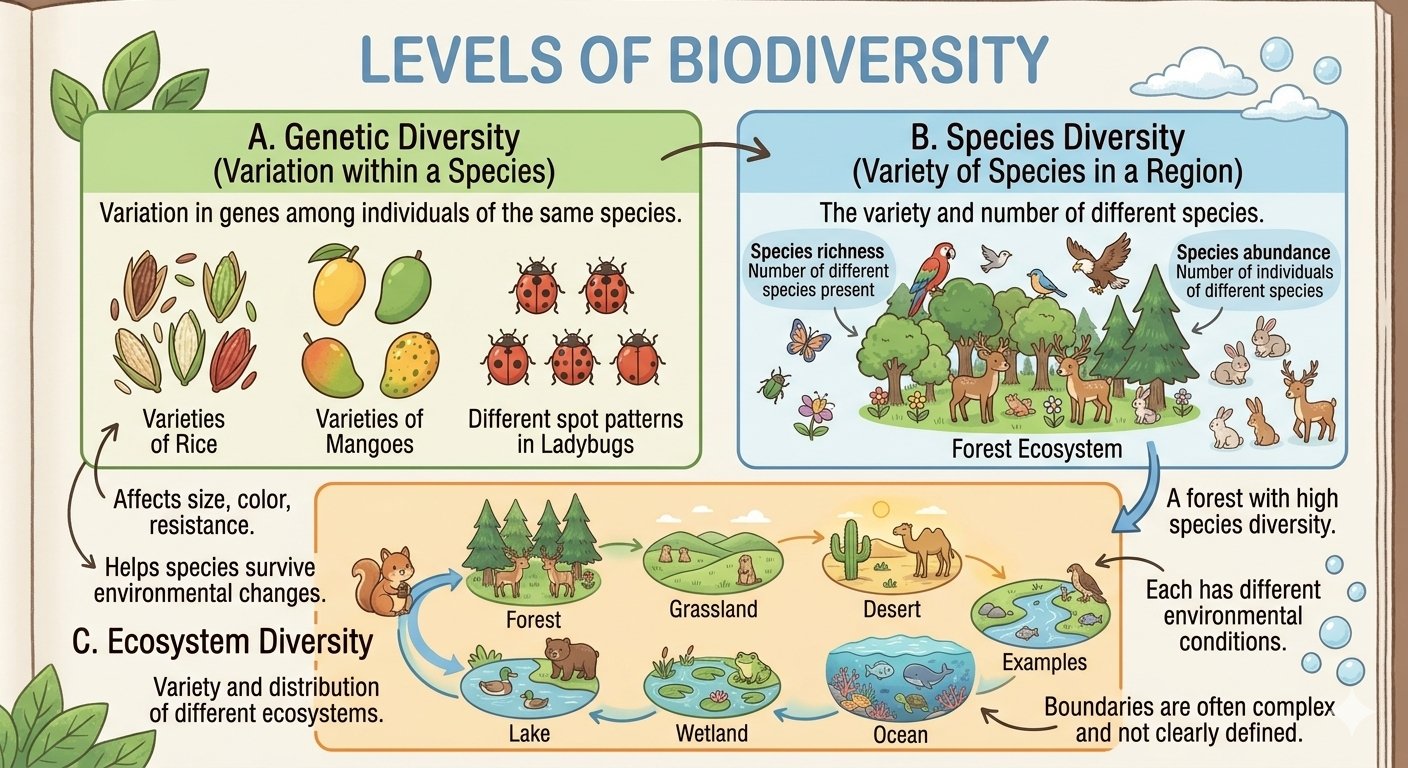
A. Genetic Diversity
Genetic diversity refers to the variation in genes among individuals of the same species.
- Individuals of the same species may have different genetic characteristics.
- These differences may affect their size, color, resistance to diseases and ability to adapt to environmental conditions.
- Genetic diversity helps species survive environmental changes.
Example: Different varieties of rice, wheat and mangoes show genetic diversity.
B. Species Diversity
Species diversity refers to the variety and number of different species found in a particular region.
It includes:
- Species richness – number of different species present.
- Species abundance – number of individuals of different species.
- Variety of species in an area.
For example, a forest containing many different types of birds, mammals, insects, trees and other organisms has high species diversity.
C. Ecosystem Diversity
Ecosystem diversity refers to the variety and distribution of different ecosystems in a region.
Different ecosystems have different environmental conditions and living organisms.
Examples:
- Forests
- Grasslands
- Deserts
- Wetlands
- Rivers
- Lakes
- Oceans
Ecosystem boundaries are often complex and may not be clearly defined.
3. Threatened Species
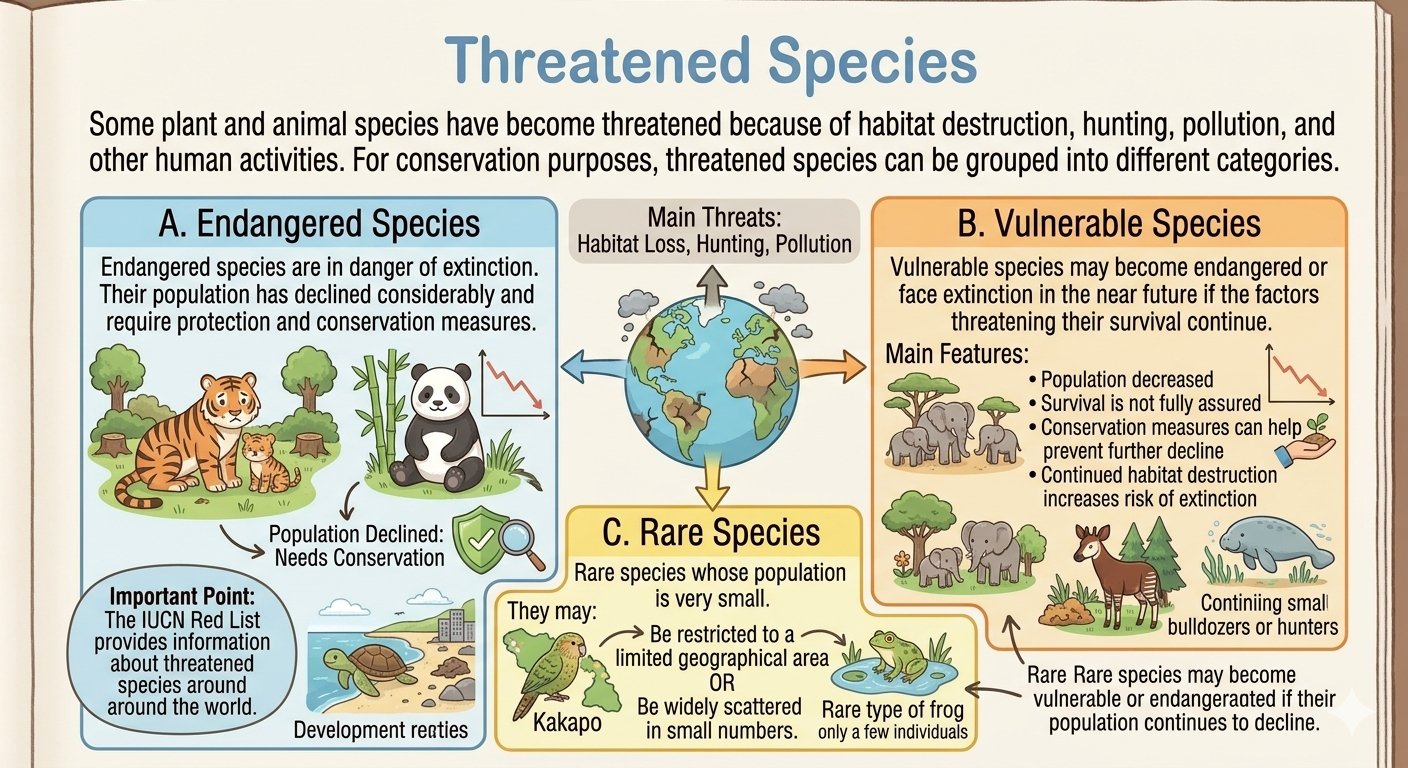
Some plant and animal species have become threatened because of habitat destruction, hunting, pollution and other human activities.
For conservation purposes, threatened species can be grouped into different categories, including:
- Endangered Species
- Vulnerable Species
- Rare Species
A. Endangered Species
Endangered species are species that are in danger of extinction.
Their population has declined considerably and they require protection and conservation measures.
Important Point
The IUCN Red List provides information about threatened species around the world.
B. Vulnerable Species
Vulnerable species are species that may become endangered or face extinction in the near future if the factors threatening their survival continue.
Main Features
- Their population has decreased.
- Their survival is not fully assured.
- Conservation measures can help prevent further decline.
- Continued habitat destruction or other threats can increase their risk of extinction.
C. Rare Species
Rare species are species whose population is very small.
They may:
- Be restricted to a limited geographical area, or
- Be widely scattered in small numbers.
Rare species may become vulnerable or endangered if their population continues to decline.
4. Exotic Species
Exotic species are species that are not naturally found in a particular habitat or region but have been introduced there.
They may be introduced intentionally or accidentally.
Examples of introduction may include:
- Plants introduced for agriculture or gardening
- Animals introduced for commercial or other purposes
Some introduced species can adapt well to their new environment and may compete with native species for food, space and other resources.
5. Biodiversity Hotspots
A biodiversity hotspot is an area that has a very high diversity of species, particularly species that are found nowhere else.
Characteristics
- High number of species
- Presence of unique or endemic species
- Often under considerable threat from human activities
- Important areas for conservation
Biodiversity hotspots are given special importance because protecting them can help conserve many species and ecosystems.
6. Loss of Biodiversity
Loss of biodiversity means the decline or disappearance of different species, genes and ecosystems from the Earth.
Increasing population and rising standards of living place greater pressure on natural resources. This can lead to the destruction and degradation of natural habitats.
Major causes include:
1. Habitat Destruction
- Forests and natural habitats are cleared for agriculture, roads, industries and settlements.
- Destruction of habitats reduces the space available for plants and animals.
2. Deforestation
- Large-scale cutting of forests destroys natural habitats.
- Tropical rainforests are particularly rich in biodiversity and face serious pressure from human activities.
3. Overexploitation
- Excessive hunting, fishing, collection of plants and use of natural resources can reduce populations of species.
4. Pollution
- Air, water and soil pollution can harm plants, animals and microorganisms.
- Pollution can damage ecosystems and reduce species populations.
5. Introduction of Exotic Species
- Introduced species may compete with native organisms.
- In some cases, they can disturb the natural balance of an ecosystem.
6. Climate and Environmental Changes
- Changes in temperature and rainfall can affect habitats and the survival of species.
- Species that cannot adapt quickly may face increased risks.
7. Conservation of Biodiversity
Conservation of biodiversity means protecting and properly managing plants, animals, microorganisms, their genes and their ecosystems.
Important Measures for Conservation
- Protect natural habitats such as forests, wetlands and grasslands.
- Control deforestation and promote afforestation.
- Establish and properly manage national parks, wildlife sanctuaries and other protected areas.
- Prevent illegal hunting and poaching.
- Control excessive exploitation of natural resources.
- Reduce air, water and soil pollution.
- Protect endangered and vulnerable species.
- Control the harmful spread of invasive exotic species.
- Promote public awareness about biodiversity.
- Encourage sustainable use of natural resources.
Long/Descriptive Questions and Answers
Q1. What is biodiversity? Explain its importance.
Ans: Biodiversity refers to the variety of life found on Earth. The word biodiversity is formed from two words: Bio, meaning life, and Diversity, meaning variety. It includes the variety of plants, animals, microorganisms, genes and ecosystems found in different geographical areas. Biodiversity is important because every organism has a role in maintaining the balance of nature. Plants provide food and oxygen, animals form part of food chains, and microorganisms help in decomposition and nutrient cycling. Biodiversity also provides humans with food, medicines, fibers, fuel and other useful resources. Therefore, protecting biodiversity is essential for maintaining healthy ecosystems and supporting life on Earth.
Q2. Explain the different levels of biodiversity.
Ans: Biodiversity is generally studied at three levels: genetic diversity, species diversity and ecosystem diversity. Genetic diversity refers to variations in genes among individuals of the same species. For example, different varieties of rice, wheat and mango show genetic diversity. Species diversity refers to the variety and number of different species present in a particular geographical area. It includes species richness and abundance. Ecosystem diversity refers to the variety of ecosystems found in a region, such as forests, grasslands, deserts, wetlands, rivers and oceans. These three levels are interconnected and together provide a complete understanding of biodiversity.
Q3. What is genetic diversity? Why is it important?
Ans: Genetic diversity refers to the variation in genes among individuals belonging to the same species. Although organisms of one species have many common characteristics, they may differ in features such as size, color, resistance to diseases, growth rate and ability to adapt to environmental conditions. For example, different varieties of rice, wheat, apples and mangoes show genetic diversity. Genetic diversity is important because it increases the ability of a species to survive changing environmental conditions. It also helps organisms resist diseases and adapt to new conditions. A species with greater genetic diversity generally has a better chance of surviving environmental changes and other threats.
Q4. What is species diversity? Explain with an example.
Ans: Species diversity refers to the variety and number of different species present in a particular region. It considers both the number of species and their abundance in an area. Species diversity can be understood through species richness, which refers to the number of different species, and species abundance, which refers to the number of individuals belonging to different species. For example, a forest containing many species of trees, birds, mammals, insects and microorganisms has greater species diversity than an area containing only a few species. Species diversity is important because different species perform different functions in an ecosystem and contribute to ecological stability.
Q5. What is ecosystem diversity? Explain with examples.
Ans: Ecosystem diversity refers to the variety and distribution of different ecosystems in a particular region. An ecosystem includes living organisms and their physical environment. Different ecosystems have different climatic conditions, soil types, vegetation and animal communities. Examples of ecosystems include forests, grasslands, deserts, wetlands, rivers, lakes and oceans. A region containing several different types of ecosystems has greater ecosystem diversity. Ecosystem boundaries are often complex because one ecosystem may gradually merge into another. Ecosystem diversity is important because different ecosystems provide different habitats and resources for organisms. Protecting ecosystem diversity therefore helps protect many species and their natural habitats.
Q6. What are endangered species? Explain their importance in conservation.
Ans: Endangered species are plant or animal species that are in danger of becoming extinct. Their populations have declined considerably because of factors such as habitat destruction, hunting, pollution, overexploitation and other environmental changes. If proper conservation measures are not taken, endangered species may disappear permanently from the Earth. The IUCN Red List provides information about threatened species around the world. Protecting endangered species is important because every species has a role in an ecosystem. Conservation measures may include protecting natural habitats, preventing illegal hunting, establishing protected areas and supporting breeding and recovery programs. Protecting endangered species also helps maintain biodiversity.
Q7. What are vulnerable species? How can they be protected?
Ans: Vulnerable species are species that may become endangered in the near future if the factors threatening their survival continue. Their populations have usually declined, and their survival is not completely assured. Habitat destruction, pollution, hunting, overexploitation and environmental changes can increase their vulnerability. These species can be protected by conserving their natural habitats and reducing human activities that threaten them. Establishing wildlife sanctuaries and national parks, preventing illegal hunting, controlling pollution and using natural resources sustainably are important measures. Regular monitoring of their populations is also necessary. Early conservation action can help prevent vulnerable species from becoming endangered or extinct.
Q8. What are rare species? How are they different from endangered species?
Ans: Rare species are species whose populations are very small. They may be restricted to a limited geographical area or may be thinly scattered over a large area. A rare species is not necessarily endangered, but its small population makes it more vulnerable to environmental changes and human activities. Endangered species, on the other hand, are species that are already in danger of extinction. If the population of a rare species continues to decline, it may eventually become vulnerable or endangered. Therefore, rare species also require monitoring and appropriate conservation measures to ensure their survival.
Multiple Choice Questions (MCQs)
1. What does the word “Bio” mean in biodiversity?
A. Variety
B. Life
C. Environment
D. Species
Answer: B. Life
2. What does “diversity” mean?
A. Variety
B. Life
C. Population
D. Habitat
Answer: A. Variety
3. Biodiversity refers to:
A. Variety of rocks on Earth
B. Variety of life on Earth
C. Variety of climates only
D. Variety of soils only
Answer: B. Variety of life on Earth
4. Biodiversity includes:
A. Plants only
B. Animals only
C. Microorganisms only
D. Plants, animals, microorganisms, genes and ecosystems
Answer: D. Plants, animals, microorganisms, genes and ecosystems
5. How many major levels of biodiversity are there?
A. Two
B. Three
C. Four
D. Five
Answer: B. Three
6. Which of the following is NOT a level of biodiversity?
A. Genetic diversity
B. Species diversity
C. Ecosystem diversity
D. Climatic diversity
Answer: D. Climatic diversity
7. Genetic diversity refers to:
A. Variety of ecosystems
B. Variation in genes within a species
C. Variety of climates
D. Number of habitats
Answer: B. Variation in genes within a species
8. Different varieties of rice are an example of:
A. Species diversity
B. Ecosystem diversity
C. Genetic diversity
D. Habitat diversity
Answer: C. Genetic diversity
9. Human beings genetically belong to the species:
A. Homo erectus
B. Homo habilis
C. Homo sapiens
D. Australopithecus
Answer: C. Homo sapiens
10. Species diversity refers to:
A. Variation of genes within one species
B. Variety and number of species in an area
C. Variety of ecosystems only
D. Variety of climate
Answer: B. Variety and number of species in an area
11. Species richness refers to:
A. Number of individuals of one species
B. Number of different species in an area
C. Size of an ecosystem
D. Number of genes
Answer: B. Number of different species in an area
12. Ecosystem diversity refers to:
A. Variety of genes
B. Variety and distribution of ecosystems
C. Number of individuals
D. Variety of climates only
Answer: B. Variety and distribution of ecosystems