Chapter – 17
Nationalism
1. Introduction
Nationalism is the feeling of belonging to a nation and the belief that the nation deserves loyalty and self-government. It has been a powerful force in world history. It united people into nation-states, inspired anti-colonial struggles such as India’s freedom movement, and also led to conflicts and wars.
2. Nations and Nationalism: How Are the Boundaries of a Nation Defined?
A nation is not simply a group of people with the same race, religion or language. Many nations contain people of different languages and religions. A nation is largely an “imagined” community, held together by shared beliefs and aspirations of its members.
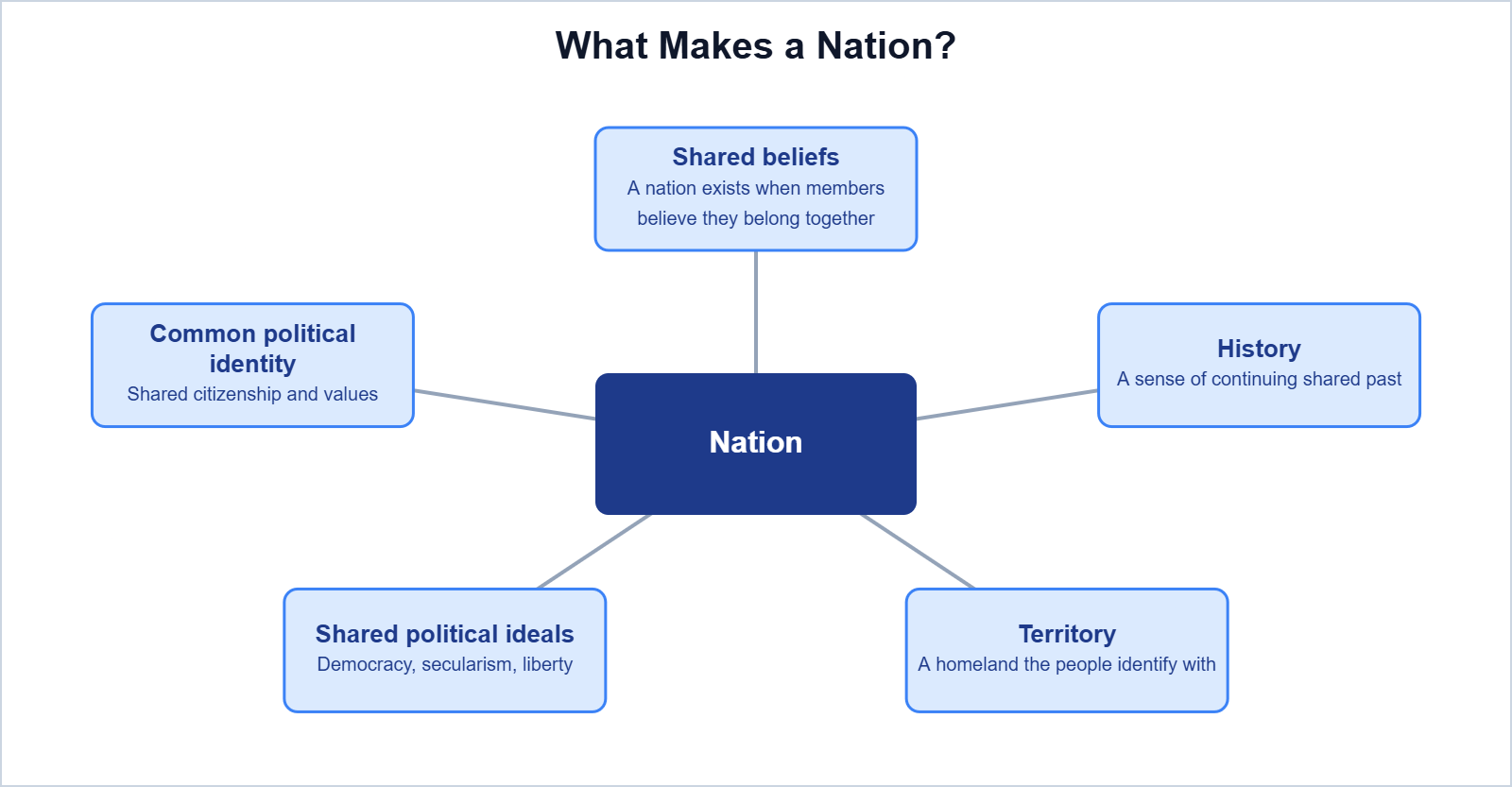
- Shared beliefs: A nation exists because its members believe that they belong together.
- History: People share a sense of a common past, preserved through memories, legends and records.
- Territory: Most nations identify with a particular land, which they call their homeland.
- Shared political ideals: Commitment to values like democracy, secularism and liberty.
- Common political identity: Shared citizenship and loyalty to the constitution, rather than one religion or language.
3. Must Every Nation Have a State? National Self-Determination
- Self-determination is the claim of a nation to govern itself and decide its own future.
- After the First World War, the break-up of the Austro-Hungarian and Ottoman empires led to the creation of many new nation-states based on this principle.
- In the 20th century, colonised peoples in Asia and Africa claimed self-determination to win independence.
- However, it is not possible for every cultural group to have a separate state. Redrawing borders often leads to violence and creates new minorities.
- The solution is to give groups rights, autonomy and recognition within existing states, through democracy and federalism.
Important: The basis of the right to self-determination is the idea that people should be able to govern themselves and protect their culture and identity.
4. What Demands Can a Nation Make on Its Citizens?
- Loyalty to the nation and respect for its constitution and laws.
- Willingness to defend the nation and contribute to its development (for example, paying taxes).
- Respect for fellow citizens and national unity.
But a democratic nation should not demand that citizens give up their religious, linguistic or cultural identities.
5. Nationalism and Pluralism
In a pluralist society, people of different cultures live together. A democratic nation must accommodate this diversity by giving equal rights and protection to minorities, as the Indian Constitution does. Rabindranath Tagore was critical of aggressive nationalism; he supported the freedom struggle but believed that love for humanity is higher than narrow patriotism.
Easy Memory Trick: A nation is built on “B-H-T-P-I”: Beliefs, History, Territory, Political ideals, Identity.
6. Important Exam Questions
Q1. What is a nation?
Ans. A community of people who believe they belong together because of shared beliefs, history, territory, political ideals and identity.
Q2. What is national self-determination?
Ans. The claim of a nation to govern itself and decide its own political future.
Q3. Must every nation have its own state? Explain.
Ans. No. It is not practical for every group to have a separate state; their rights and identity can be protected through autonomy, federalism and democratic rights within existing states.
Q4. Which empires broke up after the First World War, leading to new nation-states?
Ans. The Austro-Hungarian and Ottoman empires.
Q5. What was Tagore’s view on nationalism?
Ans. He opposed narrow and aggressive nationalism and believed humanity is higher than patriotism, though he supported India’s freedom.
Q6. What demands can a nation legitimately make on its citizens?
Ans. Loyalty to the constitution, obeying laws, paying taxes and helping defend the nation.
Conclusion: Nationalism can unite people and inspire freedom, but it must respect diversity and human rights. A democratic, plural nation offers the best balance between unity and difference.