Freedom – Class 11 Political Science Notes
Chapter – 12
Freedom
1. What Is Freedom?
Freedom means the absence of external constraints, together with the presence of conditions in which people can develop their talents. A free person is able to make choices, act on them and take responsibility for them.
Example: Nelson Mandela‘s autobiography Long Walk to Freedom describes the struggle against apartheid in South Africa. Aung San Suu Kyi of Myanmar wrote of “freedom from fear” as the most important freedom.
2. Sources of Constraints
- Domination and external control: by force, by laws of an undemocratic government, or by colonial rule.
- Social and economic inequality: caste, gender discrimination and poverty limit people’s real freedom.
The idea of Swaraj in the Indian freedom movement meant not only freedom from foreign rule but also self-rule and self-control.
3. Negative and Positive Liberty
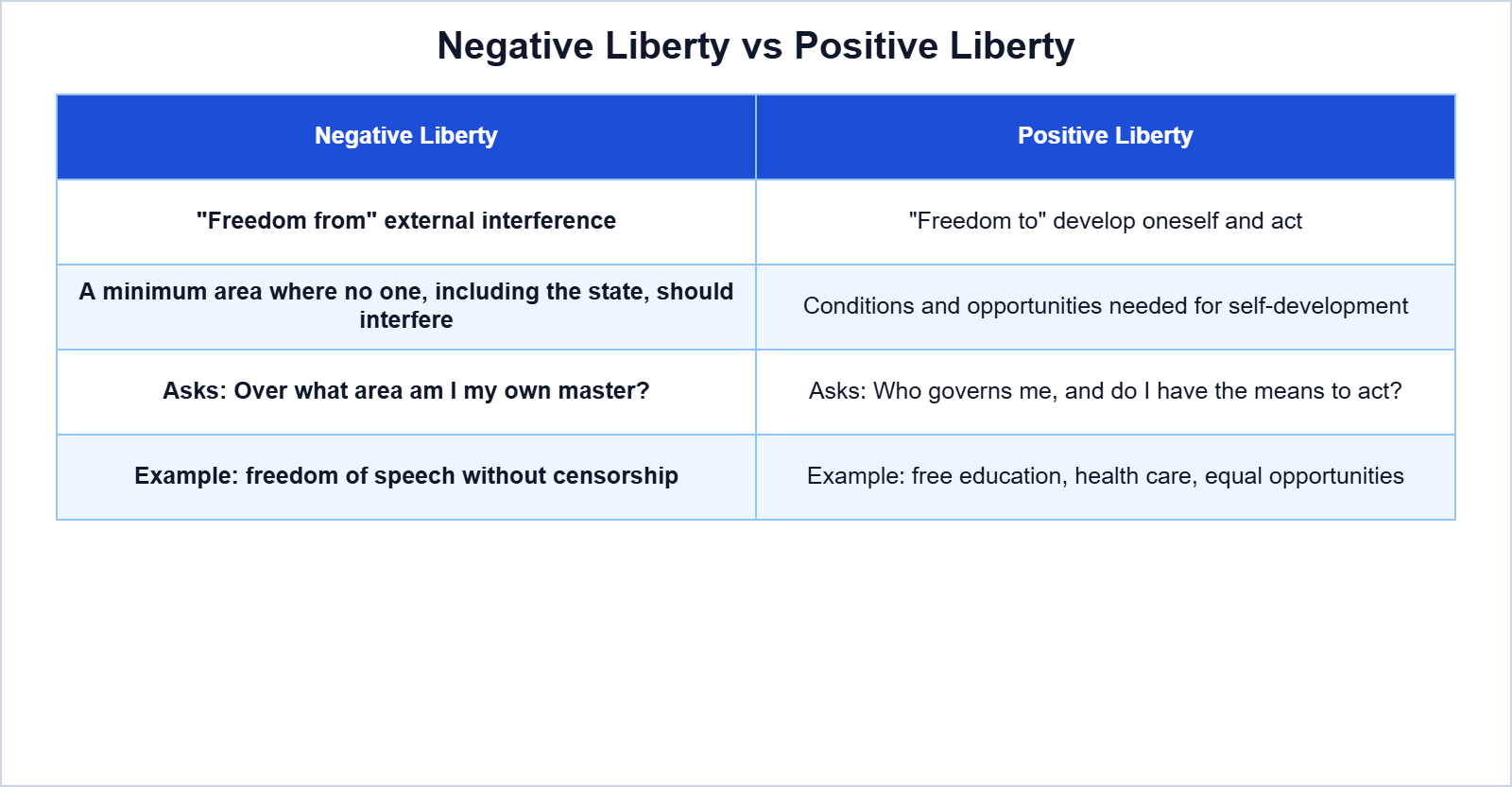
Important: Both are necessary. Negative liberty protects a private area of life; positive liberty creates conditions in which people can actually use their freedom.
4. What Are Reasonable Constraints on Individual Liberty?
- Complete freedom without any limits can lead to chaos, because one person’s freedom may harm others.
- Constraints are justified when they protect the freedom and safety of others, public order and the dignity of all.
- In India, Article 19(2) to 19(6) allow reasonable restrictions on Fundamental Freedoms in the interests of the sovereignty and integrity of India, security of the state, public order, decency or morality, and so on.
5. The Harm Principle: How Are Limits Defined?
- The British thinker John Stuart Mill, in his essay On Liberty, gave the harm principle: the only purpose for which power can be rightfully used over any member of society, against his will, is to prevent harm to others.
- Self-regarding actions (affecting only oneself) should be free from state interference.
- Other-regarding actions (affecting others) may be restricted if they cause harm.
- For minor harm, social disapproval may be enough; for serious harm, legal punishment is justified.
Exam point: Constraints must be reasonable, justified by reasons and applied through fair procedures; otherwise they become tools of oppression (for example, unjustified censorship).
6. Freedom of Expression
Freedom of expression is considered essential for democracy and personal growth. Mill argued that even false ideas should be allowed, because debate helps truth emerge and keeps beliefs alive. However, the question of when expression may be restricted (for example, hate speech) is always debated.
Easy Memory Trick: “Freedom FROM (negative), freedom TO (positive), no HARM to others”.
7. Important Exam Questions
Q1. What is freedom?
Ans. Freedom is the absence of external constraints and the presence of conditions in which people can develop their abilities.
Q2. Distinguish between negative and positive liberty.
Ans. Negative liberty is freedom from interference in a private area of life; positive liberty is the freedom to develop oneself, with the conditions and opportunities to do so.
Q3. What is the harm principle?
Ans. J.S. Mill’s principle that an individual’s liberty may be restricted only to prevent harm to others.
Q4. What are self-regarding and other-regarding actions?
Ans. Self-regarding actions affect only the person doing them; other-regarding actions affect others and may be restricted if they cause harm.
Q5. Why are some restrictions on freedom necessary?
Ans. To protect the freedom, safety and dignity of others and to maintain public order.
Q6. What did Swaraj mean in the Indian freedom movement?
Ans. Freedom from foreign rule, as well as self-rule and self-control.
Conclusion: Freedom is precious, but it must be balanced with the freedom of others. Reasonable limits, based on the harm principle, help freedom flourish for everyone.