Chapter – 10
The Philosophy of the Constitution
1. What Is Meant by the Philosophy of the Constitution?
The philosophy of the Constitution means the moral values, ideals and vision on which it is based. To understand it, we must read the Constitution together with the Constituent Assembly Debates, which explain why each provision was made.
2. The Preamble
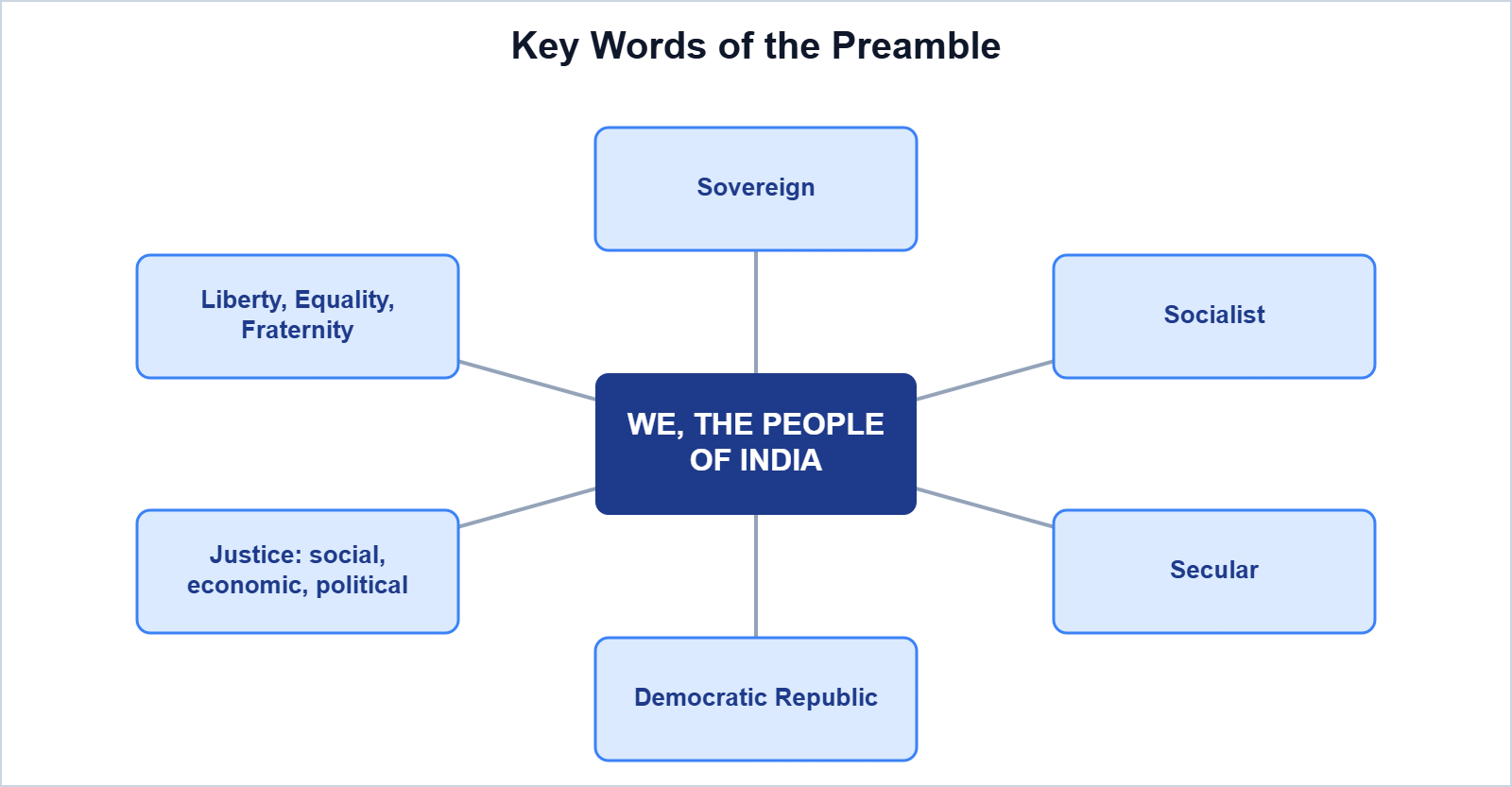
The Preamble summarises the philosophy of the Constitution. It declares India to be a Sovereign, Socialist, Secular, Democratic Republic and promises justice, liberty, equality and fraternity to all citizens. It begins with “We, the people of India”, showing that the people are the source of authority.
Remember: The words “socialist”, “secular” and “integrity” were added by the 42nd Amendment (1976).
3. Core Provisions and the Vision Behind Them
- Individual freedom: Freedom of speech, expression and other liberties, protected by Fundamental Rights.
- Social justice: Reservations for SCs, STs and other backward classes, and abolition of untouchability, to remove historical injustice.
- Respect for diversity and minority rights: Communities have rights to protect their culture and run educational institutions.
- Secularism: The state has no official religion; it maintains a principled distance from all religions.
- Universal adult franchise: Every adult has the right to vote, regardless of caste, religion, gender or wealth.
- Federalism: Including asymmetric arrangements (special provisions for some states).
- National identity: A common national identity that respects regional and cultural differences.
4. How the Vision Was Shaped by Modern Indian Political Thought
- The national movement gave ideals of freedom, democracy and equality.
- Mahatma Gandhi stressed non-violence, decentralisation and dignity of the poor.
- Dr B.R. Ambedkar stressed social justice, the end of caste discrimination and constitutional morality.
- Jawaharlal Nehru emphasised democracy, secularism, scientific temper and planned development.
- The makers combined liberal ideas (individual rights) with social democratic ideas (welfare and justice).
5. Procedural Achievements
- The Constitution was made through deliberation and debate rather than force.
- Decisions were taken by consensus and accommodation of different groups.
- It reflects a spirit of compromise and openness to change.
6. Criticisms and Limitations
Criticism | Response |
|---|---|
It is unwieldy (very long) | It includes details needed for a large, diverse country |
It is unrepresentative (Assembly was indirectly elected) | The members represented many groups and debated openly |
It is an alien document (borrowed) | Ideas were adapted to Indian conditions |
Limitations: A centralized idea of national unity; some important social and economic rights placed in non-enforceable Directive Principles; issues of gender justice within the family were not fully addressed.
Easy Memory Trick: Preamble ideals “J-L-E-F” = Justice, Liberty, Equality, Fraternity.
7. Important Exam Questions
Q1. What does the Preamble declare India to be?
Ans. A Sovereign, Socialist, Secular, Democratic Republic.
Q2. What is the significance of the words “We, the people of India”?
Ans. They show that the Constitution derives its authority from the people.
Q3. Name four core values of the Indian Constitution.
Ans. Individual freedom, social justice, secularism and universal adult franchise.
Q4. Why is the Constitution sometimes called an “alien document”? How can this be answered?
Ans. Because it borrowed many features from other constitutions. However, these features were carefully adapted to Indian needs and combined with original Indian ideas.
Q5. Mention one limitation of the Constitution.
Ans. Some important social and economic rights are only in the Directive Principles, which cannot be enforced by courts.
Q6. How did Dr Ambedkar influence the philosophy of the Constitution?
Ans. He emphasised social justice, the abolition of untouchability and caste discrimination, and constitutional morality.
Conclusion: The philosophy of the Constitution combines freedom, equality, justice, secularism and respect for diversity. It is a moral vision that continues to guide Indian democracy.